
How has World Cup travel shaped demand for stays in US host cities this summer?
The 2026 FIFA World Cup has kicked off across North America, and while many soccer fans plan to attend matches in person, the potential economic boom from tourism in U.S. host cities remains to be seen.
Much like the Olympics or other tentpole international sporting events, the 48-team World Cup tournament, which is held every four years and is split across 16 host cities in Canada, Mexico, and the U.S. this time around, is a major draw for sports fans seeking unique travel experiences.
Even as tourism boards and the hospitality industry in the 11. U.S. host cities have worked to enhance World Cup branding and attract visitors during peak summer season -- this year's tournament runs from June 11 through July 19 -- demand in individual destinations has not been uniform, experts told ABC News.
Melanie Fish of Expedia Group, which owns the travel booking site Expedia, as well as Hotels.com and Vrbo, told ABC News that things are "likely to be uneven by market."

"Some host cities should see real upside, while others may not match the early hype," Fish explained. "What Expedia data shows clearly is that fans booked earlier, are traveling farther, and spending more to be part of the tournament -- so the demand is there -- it's just not showing up evenly in every city."
Because of the geographical spread -- six matches are being played in Seattle, the San Francisco Bay Area, Philadelphia, and Kansas City; seven in Miami, Houston, and Boston; eight in the New York/New Jersey region, Los Angeles, and Atlanta; and nine in Dallas -- the host cities seeing the greatest influx of business may come later for matches that gain higher fan interest.
According to Expedia, host cities in the round of 32 and round of 16 didn't see huge search increases and have been more consistent with regular summer demand.

"As the tournament moves into the knockout rounds, the action funnels into fewer cities, and I'd expect that to create more concentrated, more urgent travel demand," Fish said.
FIFA projected $3.3 billion in total economic impact and more than 1.2 million visitors to the New York New Jersey region alone as a result for the matches and final being hosted there.
The American Hotel and Lodging Association, which represents more than 30,000 members from all segments of the lodging industry, reported last month that hoteliers in host cities are seeing softened demand due to a range of factors including travel barriers and rising costs.
"Hotel demand in host cities has evolved differently than many initially anticipated, driven in part by lower-than-expected international visitation. We are hearing from many of our members that demand is picking up, consistent with a recent trend toward shorter booking windows for events of this caliber," Rosanna Maietta, president and CEO of the American Hotel and Lodging Association, told ABC News.
"Unlike typical leisure travel, many visitors are still finalizing plans and securing tickets. The industry expects some acceleration of late bookings in the lead up to individual games, and we believe stadium attendance will be strong," Maietta added of the potential for more bookings to materialize.
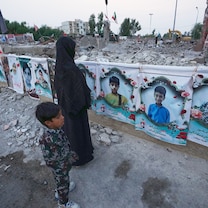


A confluence of factors stemming from conflict in the Middle East, including rising fuel and grocery prices, have impacted travel and purchasing decisions in recent months. However, experts who spoke to ABC News said international travel is still up from certain parts of the world.

"International flight data indicates that bookings into Dallas Fort Worth and Dallas Love Field are pacing over 78% ahead of last year for this same period," Zane Harrington, director of communications at Visit Dallas, told ABC News. "And all airline bookings for June arrivals are running 24.4% ahead of last year."
"Dallas will host matches for teams from Argentina, England, Croatia, the Netherlands, Austria, Jordan, Japan, the Czech Republic and Sweden," Harrington added. "We are seeing significant pace increases in airline bookings from every country we are hosting. Conveniently for those travelers, we offer direct flights to a majority of those countries."
Additionally, according to Fish, when looking at the demographics on search, Expedia found international demand has outpaced domestic demand, and "some of the biggest inbound interest comes from Japan and the U.K., which are leading inbound travel demand into Dallas."
In Houston, which is hosting seven World Cup matches through July 4, local hotel bookings have trended positive, a representative for Houston First Corporation, the city's destination marketing organization, told ABC News.
The representative said that compared to the same time period last year -- June to July -- the city has seen "better than normal" bookings so far, according to a recent hotel tracking report of committed rooms in the overall area.

Short-term rental platform Airbnb told ABC News it has seen a big influx in searches across host cities thus far, up 80% compared to the year prior, with the biggest increases in actual bookings in Philadelphia and Miami.
The company said hosting has also grown ahead of the tournament, with more than 100,000 new homes listed in World Cup cities for the first time since October last year.
"Families and groups are at the heart of this and account for around half of World Cup trips booked so far, with many choosing larger homes where they can stay together and share the experience, often for less than the cost of multiple hotel rooms," Ali Killam, head of communications for Airbnb, told ABC News.
Last week alone, Killam said Airbnb saw its biggest surge in searches of the year, up 35%. She added that the company expects that number to go up as the tournament proceeds.
Despite the early projected impacts boasted about by tournament organizers, much like any soccer match, the winners -- in this case host cities -- will remain uncertain until the final match has concluded.

Popular Reads
ABC News Live