Arizona community becomes COVID-19 hot spot without access to speedy testing
Maryvale in West Phoenix, Arizona, has been hit particularly hard.
As the war against COVID-19 continues across the country, Arizona has become one of the world’s biggest hot spots.
The state saw COVID-19 cases increase 850% since the state reopened on May 15. More than one in three of those tested in the state have the virus. One of the hardest hit areas is the Maryvale neighborhood in West Phoenix.
ABC News spoke to patients, test administrators, the Mayor of Phoenix, and a doctor in the community -- and rode along with first responders from Phoenix Fire Department’s Engine 25 on the frontlines of the battle there.
This time, the call was for Martin Molina, a 30-year-old construction worker who said he had a fever and splitting headaches. The timing couldn’t be worse -- his girlfriend, Yesenia Lopez, just gave birth to their son last weekend. Their 11-month-old daughter was also running a temperature.
“To be honest, I wasn’t able to believe in this pandemic,” Lopez told ABC News. “But now I do. Now I’m scared. What am I going to do? I don’t know. I don’t know, I have my two little babies in the house.”
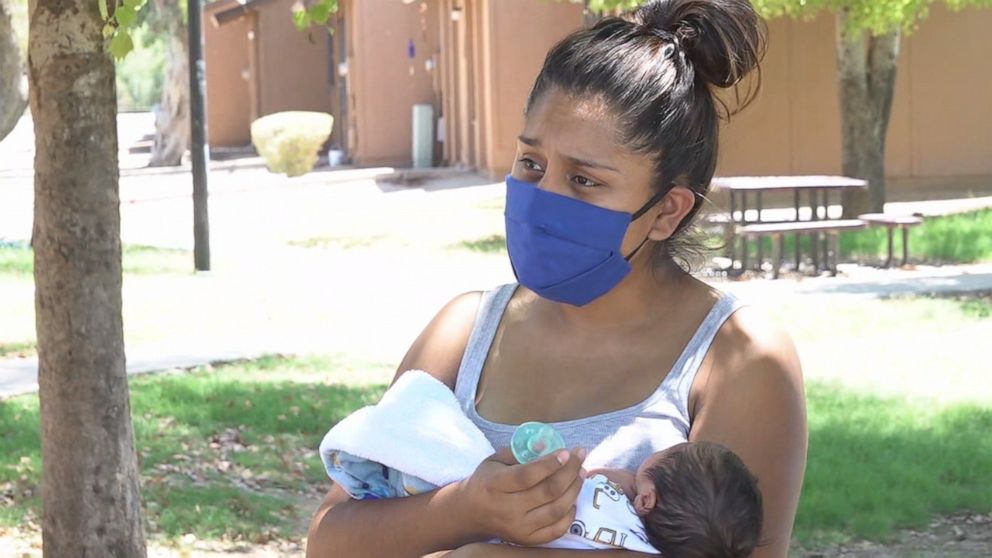
Lopez broke into tears, thumbing her St. Jude pendant, at the thought of getting sick herself. Who would care for her, she wondered.
“I mean my mom can help me out, but I don’t know,” she said. “It’s hard, but we’ll go through this.”
The initial assessment of Molina’s vital signs seemed hopeful. An EMT on the scene said his symptoms were mild – without a fever, his lungs were clear and his blood pressure and blood sugar were at a good level.
The team offered to take Molina to the hospital, cautioning that he may be waiting for a while because he wasn’t not sick enough to warrant immediate attention. The couple decided it was worth going anyway.
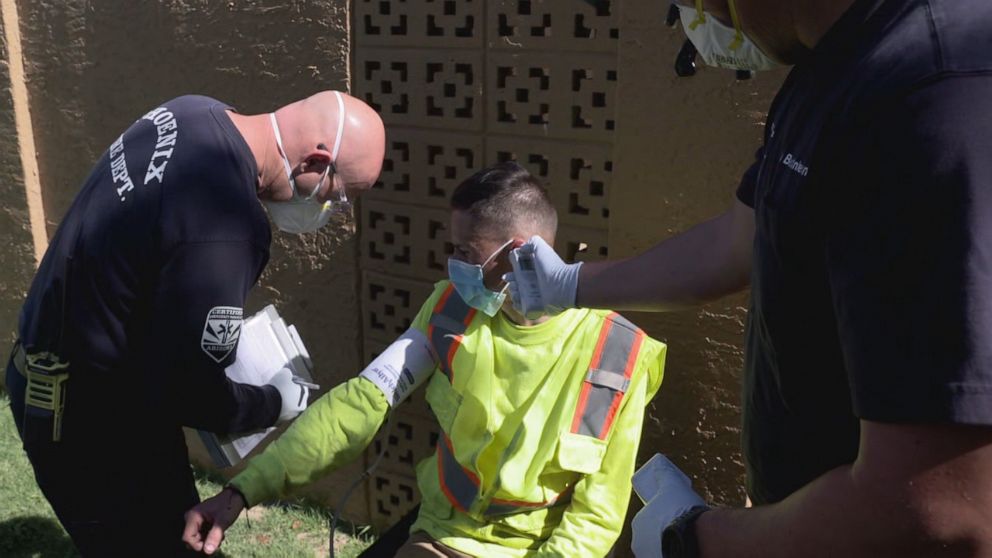
“In Maryvale, there’s a proud tradition of families living together… Unfortunately that's the situation for affordability, where they're all under one roof,” Phoenix Fire Dept. Capt. Rob McDade told ABC News. “We're responsible for these people... This is it. It says it on our trucks. It says, ‘Our family helping your family.’ And our firefighters take that to heart.”
Engineer Chris West says it’s the tight-knit nature and multi-generational families in Maryvale may have inadvertently helped spread the virus there.
“We have a lot of families that live together,” West said. “Lots of people, they grow up in the house, they stay in the house. So yes, usually when one person gets it, the whole house is going to get it.”
West himself is just returning to work after isolating at home with the virus.
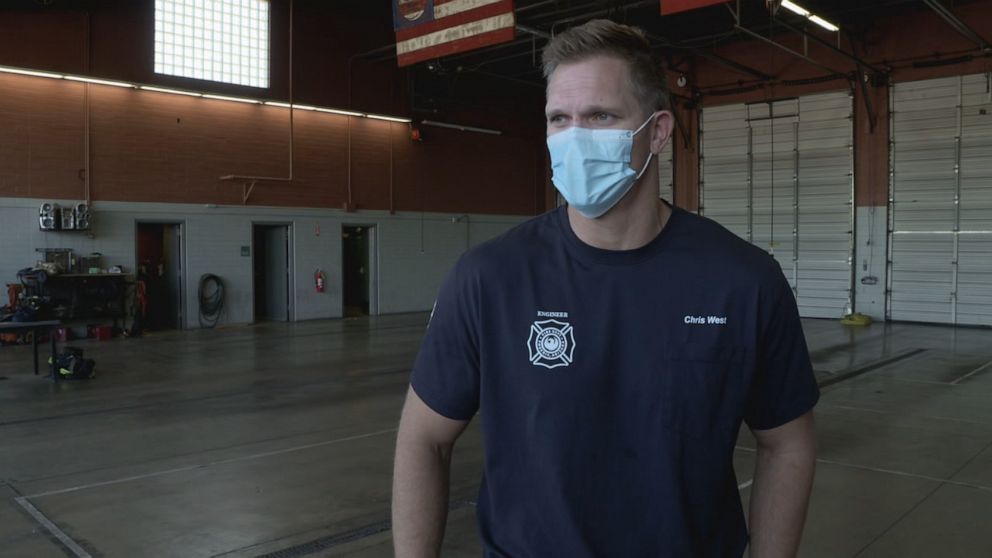
“When everything was shut down, we’d go [to this community] like maybe once, twice. It was a big deal when we had a COVID call,” West said. “Then it got to the point where almost all of our calls are COVID calls.”
Across the U.S., Latinos and African Americans are contracting the virus at three times the rate of their white neighbors. They’re also twice as likely to die from it.
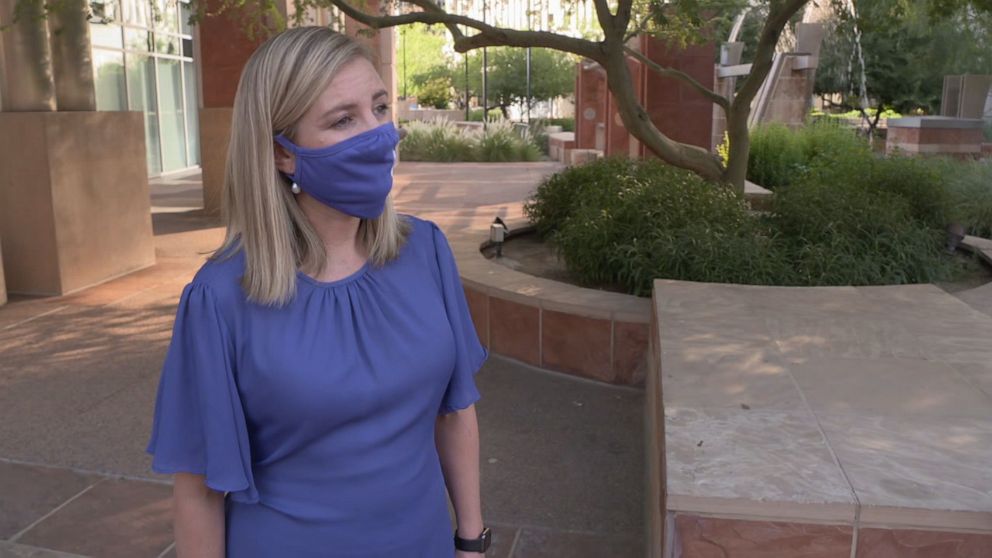
Arresting the virus’ onslaught depends on testing, which Phoenix Mayor Kate Gallego says is a system near total collapse.
“We need more resources from our federal government. This is the United States of America,” she told ABC News. “We are the world’s leading economy. We ought to be able to provide more resources for our sickest residents months into the COVID-19 virus... People should not have to wait an entire day to get a test and then a week to get a result.”
Gallego and health care providers on the frontlines anticipate that the problem in Arizona could get worse.
“The hospital CEOs tell me they are preparing for a significant surge of cases that come as a result of large events, particularly for large family events,” she said.
However, without rapid testing, Maryvale residents like Lopez and Molina are left waiting for results in crowded multigenerational homes, fearing they’ll infect their families.
“I was able to speak directly to the admiral who is in charge of testing for the United States and draw his attention to Maryvale,” Gallego said. “He did say that he will look at the data… My message to him is tomorrow is too late. We have to get you here as soon as possible. “
A free testing site in South Phoenix, an area underserved in testing, is run by a nonprofit organization and aims to test 2,000 people a day.
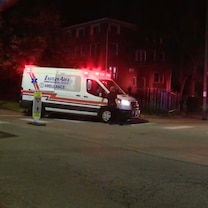

The site opens at 6 a.m., but people seeking tests started lining up in the middle of the night -- including three generations of Keona Cole’s family.
Cole told ABC News they arrived slightly after midnight.
“We wanted to be one of the first to get here so that we’ll be able to get tested today,” she said. “It’s our lives and the lives of our family that we have to protect, so we need to know.”
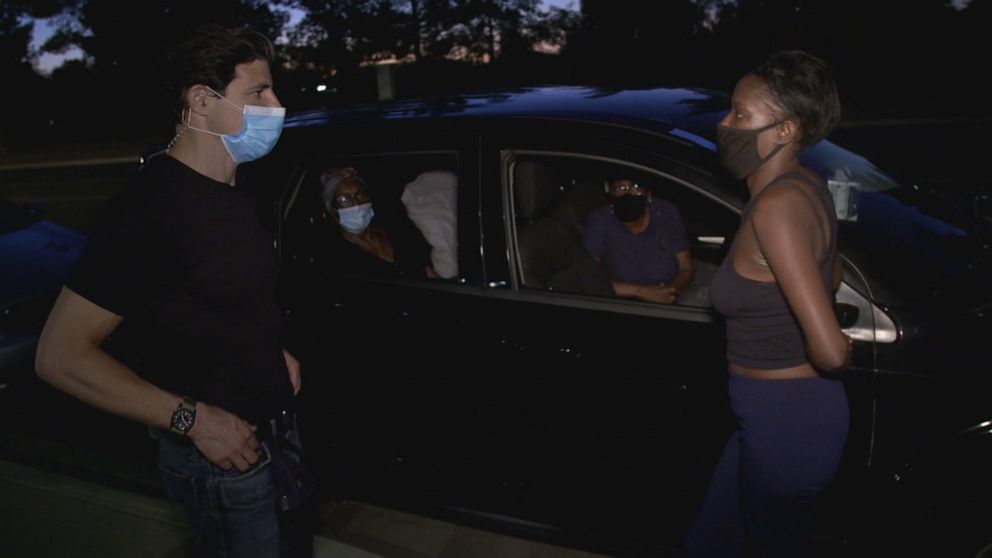
This site, like so many others, just can’t meet demand with the amount of supplies they’re given.
They’ve had to turn away people like Neil Mack, who waited five and a half hours the last time he came. This time, he showed up at 1 a.m. He said he visits this site specifically because it doesn’t require health insurance.
“I don’t know who’s running it but I’m glad they are,” Mack said.
The lack of testing is baffling to Lori Nicolson and Denise Suggs, who arrived at 4 a.m.
“They are not offering [tests] to us -- the low income, the middle class -- a lot of people do not have insurance, cannot afford to pay for this,” Suggs told ABC News. “There’s nowhere in Arizona you can go get this for free.”
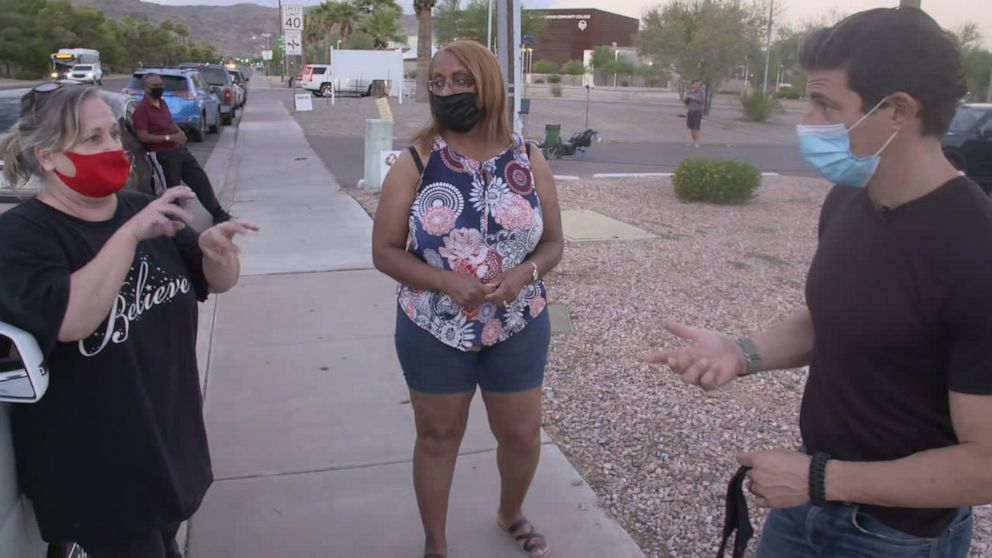
“People with money do get tested, like sports teams, baseball teams, the president,” Nicolson told ABC News. “But every day, middle income to lower income -- this is our only option.”
Speaking publicly about the virus for the first time in over a week, Arizona Governor Doug Ducey admitted that loosening the stay-at-home orders in May was the primary cause for the rapid escalation and cases in June.
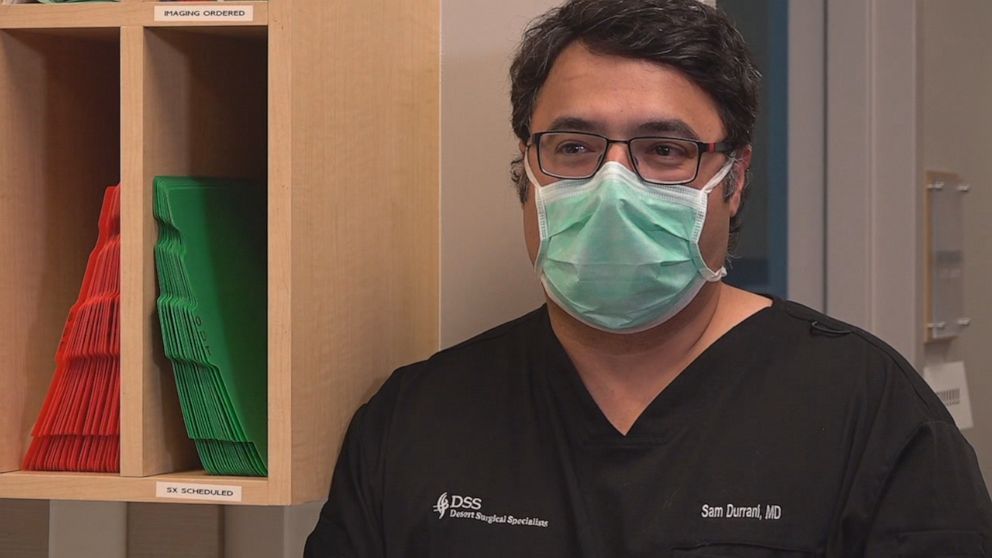
Dr. Sam Durrani, the COVID-19 response chief for the HonorHealth system, points out it’s difficult to find the virus’ true prevalence because of a lag in reporting.
“Some of the testing is delayed seven days because the testing centers are so overwhelmed,” he said.
Durrani joined ABC News two weeks ago when President Donald Trump held a rally in Phoenix. He was so shocked by the lack of masks, he started snapping pictures of the crowd.
“It’s not good,” he said. “Any mass gathering right now is going to prompt the cases of COVID to spread.”
The president’s message that night was that COVID-19 is “going away.” That’s not true, Durrani says.
“The situation [has] obviously worsened. In the last two weeks, our hospitalizations have gone up by about 80%. It's been a rapid increase,” he said.
Durrani says the United States “should have been more prepared” for a pandemic.
“It is a failure that we do not have rapid, readily available tests for everyone in our country,” he said.
Staying at home can only combat the virus if the virus cannot spread behind those walls
Ideally, when Molina came home to his children, girlfriend and his elderly parents, he should’ve been able to isolate until he learns his COVID-19 test results -- but that isn’t a reality.
“He cannot be isolated,” Lopez said. “I was concerned because we all lived together -- my babies, especially, my two little babies… They're my life.”
Molina told ABC News he received his test results -- he is positive for COVID-19.
Related Topics

Popular Reads

ABC News Live