Coronavirus updates: Global death toll surpasses 1 million

The United States leads the world in deaths, with a fifth of all fatalities.

Last Updated: October 6, 2020, 6:36 AM EDT

A pandemic of the novel coronavirus has now killed more than 1 million people worldwide.

Over 33.2 million people across the globe have been diagnosed with COVID-19, the disease caused by the new respiratory virus, according to data compiled by the Center for Systems Science and Engineering at Johns Hopkins University. The criteria for diagnosis -- through clinical means or a lab test -- has varied from country-to-country. Still, the actual numbers are believed to be much higher due to testing shortages, many unreported cases and suspicions that some national governments are hiding or downplaying the scope of their outbreaks.

Since the first cases were detected in China in December, the virus has rapidly spread to every continent except Antarctica.

The United States is the worst-affected country, with more than 7.1 million diagnosed cases and at least 204,778 deaths.

California has the most cases of any U.S. state, with more than 809,000 people diagnosed, according to Johns Hopkins data. California is followed by Texas and Florida, with over 758,000 cases and over 700,000 cases, respectively.

Nearly 190 vaccine candidates for COVID-19 are being tracked by the World Health Organization, at least nine of which are in crucial phase three trials.

Latest headlines:

Here's how the news developed today. All times Eastern.
Sep 28, 2020, 10:41 AM EDT

Russia reports over 8,000 new cases for 1st time since mid-July

Russia confirmed 8,135 new cases of COVID-19 over the last 24 hours, the country’s highest single-day increase since mid-July.

An additional 61 coronavirus-related deaths were also recorded in the past day, according to Russia’s coronavirus response headquarters.

Russia’s cumulative total now stands at 1,159,573 confirmed cases and 20,385 deaths.

Almost 27% of the newly confirmed cases -- 2,217 -- were registered in the capital, Moscow.
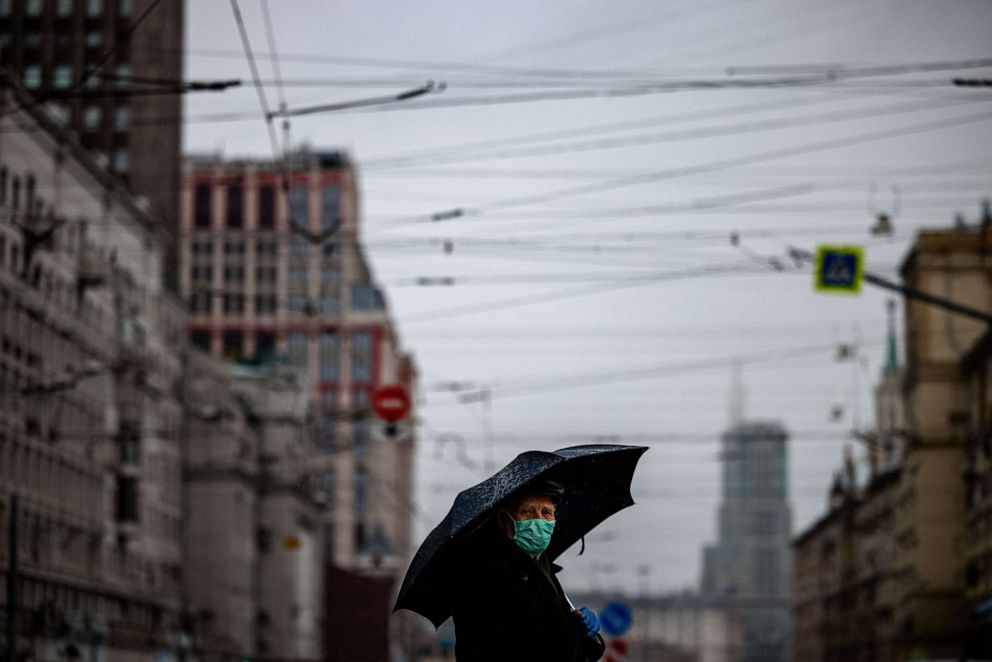
An elderly man wearing a face mask and gloves to protect against the novel coronavirus walks with an umbrella in Moscow, Russia, on Sept. 28, 2020.
Dimitar Dilkoff/AFP via Getty Images

The daily number of new infections has been on the rise in Russia this month, suggesting the country is entering the second wave of the coronavirus pandemic that is hitting Europe. Unlike other European nations, however, Russia has effectively returned to near-normal life in recent months with few restrictions observed.

Bars, cinemas, nightclubs and restaurants have reopened while social distancing rules exist more or less only on paper. Although face masks are mandatory on public transportation in Moscow and other major cities, few people seem to oblige and police are not enforcing it for now. Still, some shops have been shut down in the capital for failing to observe quarantine rules.

Last week, amid the surge of new cases, Moscow's mayor issued new advice recommending people older than 65 as well as at-risk groups to stay at home. Employers have also been requested to allow as many people as possible to work from home. Meanwhile, Russia's public health watchdog has called on people to congregate less in public places.
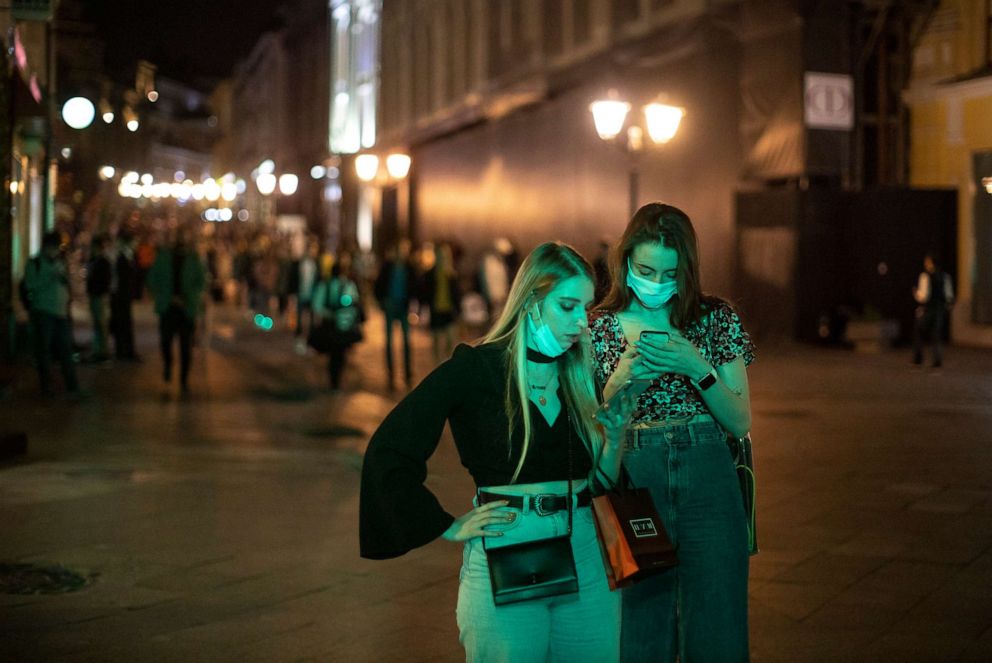
Two women wearing face masks to protect against the novel coronavirus look at a smartphone in central Moscow, Russia, on Sept. 25, 2020.
Alexander Zemlianichenko/AP

Over the weekend, Russia's top medical adviser said the growth in cases was expected as it's primarily the result of colder weather and the start of the traditional flu season.

However, the health system in Saint Petersburg is already showing signs of strain. A long queue of ambulances has appeared outside a COVID-19 hospital in the city, as it did during the height of the country's epidemic in April. Officials said last week that just 6% of the city's hospital beds remain free.

Last month, Russia became the first country in the world to officially register a COVID-19 vaccine and declare it ready for use. The Russian government approved the vaccine before completing its final Phase III trial, eliciting criticism from experts around the globe.

ABC News Alina Lobzina and Patrick Reevell contributed to this report.
Sep 28, 2020, 8:19 AM EDT

'We're not in a good place,' Fauci warns

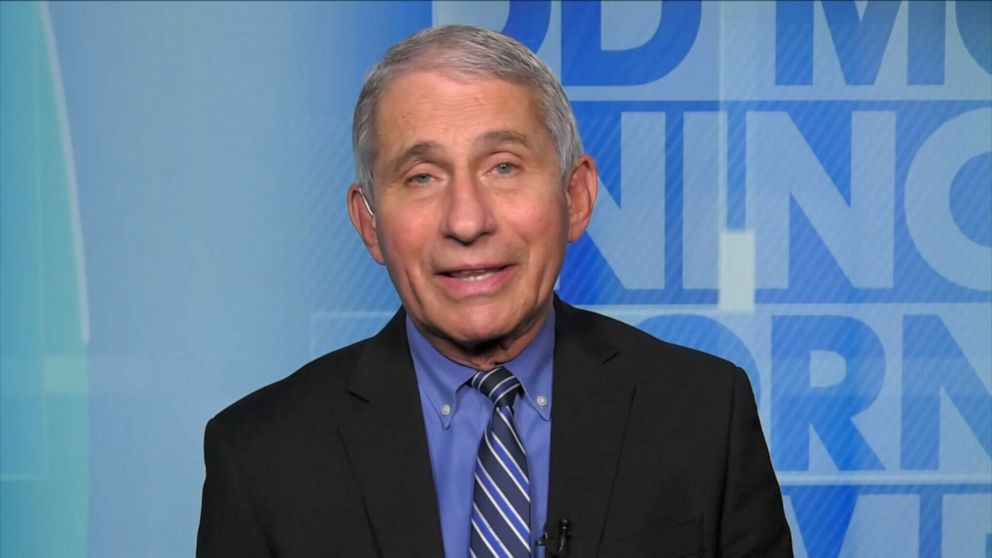
The United States is "not in a good place" as some areas report upticks in COVID-19 infections and hospitalizations, according to Dr. Anthony Fauci, the nation's leading infectious diseases expert.

"As we get into the fall and the winter, you really want the level of community spread to be as low as you possibility get it," Fauci, the director of the National Institute of Allergy and Infectious Diseases and a key member of the White House coronavirus task force, told ABC News in an interview Monday on "Good Morning America."

"There's certainly parts of the country that are doing well," he added. "But ... there are states that are starting to show uptick in cases and even some increases in hospitalizations in some states. And, I hope not but, we very well might start seeing increases in deaths."

"You don't want to be in a position like that as the weather starts getting cold," he warned. "So we really need to intensify the public health measures that we talk about all the time."

Dr. Anthony Fauci speaks on "Good Morning America," Sept. 28, 2020.
ABC News

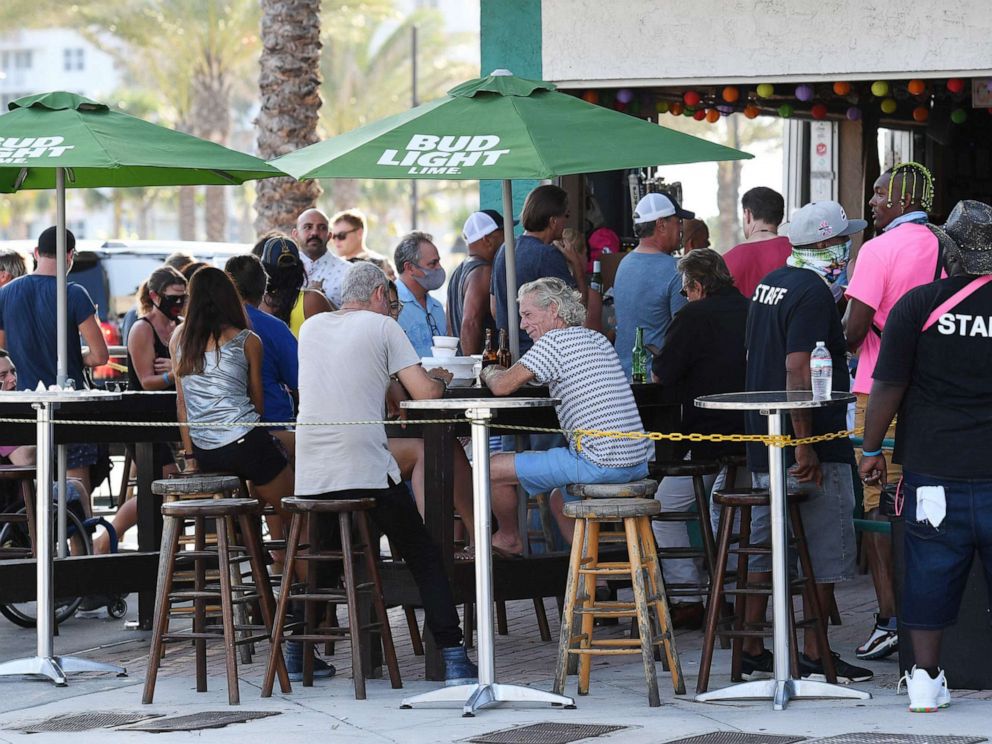
When asked about Florida's recent decision to reopen bars and restaurants at full capacity and suspend fines for not wearing masks, Fauci called it "very concerning."

"That is something that we really need to be careful about, because when you're dealing with community spread and you have the kind of congregate setting where people get together particularly without masks, you're really asking for trouble," he said. "Now's the time actually to double down a bit."

People gather at the Elbo Room bar in Ft. Lauderdale, Fla., Sept. 27, 2020. The governor announced on Friday that Florida moves to phase 3 of coronavirus reopening plan, with bars and restaurants open at full capacity.
Larry Marano/REX via Shutterstock

That doesn't mean another shutdown, he noted.

"We're not talking about shutting anything down. We're talking about common sense type of public health measures that we've been talking about all along," he said. "Obviously, if things really explode you'd have to consider that. But we want to do everything we possibly can to avoid an absolute shutdown."

As the global death toll from the coronavirus pandemic edges closer to 1 million, Fauci warned that the situation is "very serious."

"You got to take it very seriously," he said.

Sep 28, 2020, 7:53 AM EDT

Missouri again reports record-high COVID-19 hospitalizations

There were a 1,125 patients hospitalized due to COVID-19 across Missouri on Sunday, the highest number the U.S. state has reported since the start of the pandemic.

It was the third straight day that Missouri had logged a record number of COVID-19 hospitalizations. There were 1,068 patients on Friday and 1,101 on Saturday, according to data from the Missouri Department of Health and Senior Services.

PHOTO: Members of the St. Louis Symphony Quintet perform for medical workers on the campus of the Washington University School of Medicine and Barnes-Jewish Hospital on Ellen S. Clark Hope Plaza in St. Louis, Missouri, on Sept. 24, 2020.
Members of the St. Louis Symphony Quintet perform for medical workers on the campus of the Washington University School of Medicine and Barnes-Jewish Hospital on Ellen S. Clark Hope Plaza in St. Louis, Missouri, on Sept. 24, 2020. The lunch hour performance was part of the orchestra's "On the Go" series of pop-up chamber music events. Quintet members are Hannah Ji, left, Andrea Jarrett, Michael Casimir, Elizabeth Chung and Tzuying Huang.
Robert Cohen/St. Louis Post-Dispatch via AP

Overall, Missouri has confirmed 123,406 COVID-19 cases with 2,063 deaths. The state's seven-day positivity rate for COVID-19 tests stands at 11.8%, according to health department.

Sep 28, 2020, 6:43 AM EDT

Bars, restaurants close in Marseille area amid rising infections

Bars and restaurants in the French port city of Marseille and nearby Aix-en-Provence were forced to shut their doors on Sunday night for a week, as part of local measures to stem rising COVID-19 infections.

The situation will be reassessed after seven days, and the closures could be extended another week. The affected businesses are allowed to operate delivery and take-out services in the meantime.

"The virus is still circulating, and our battle continues," French Health Minister Olivier Veran wrote on Twitter Sunday. "I understand the anger at the closure of bars [and] restaurants in Marseille, Aix, and the time limits in other cities. But this decision is neither final nor arbitrary: it limits the spread of the virus [and] avoids the saturation of hospitals."

A restaurant owner removes chairs and tables on a terrace in Marseille, southern France, on Sept. 27, 2020, as the city is again being forced to close down bars and restaurants due to the coronavirus pandemic.
Nicolas Tucat/AFP via Getty Images

Bars and restaurant owners in Marseille took to the streets Monday to protest the closures. One protester held a sign that read, "Veran killed me."

France is not the only country seeing a resurgence in COVID-19 cases. Other European nations including Spain and the United Kingdom are also grappling with growing outbreaks.

ABC News' Ibtissem Guenfoud contributed to this report.

Related Topics

Sponsored Content by Taboola