Coronavirus updates: Over 7,000 Americans died in past week

The increase comes less than two weeks after Halloween.

Last Updated: November 18, 2020, 4:38 AM EST

A pandemic of the novel coronavirus has now killed more than 1.3 million people worldwide.

Over 53.2 million people across the globe have been diagnosed with COVID-19, the disease caused by the new respiratory virus, according to data compiled by the Center for Systems Science and Engineering at Johns Hopkins University. The actual numbers are believed to be much higher due to testing shortages, many unreported cases and suspicions that some national governments are hiding or downplaying the scope of their outbreaks. The criteria for diagnosis -- through clinical means or a lab test -- has also varied from country to country.

Since the first cases were detected in China in December, the virus has rapidly spread to every continent except Antarctica. The United States is the worst-affected nation, with more than 10.7 million diagnosed cases and at least 244,283 deaths.

Nearly 200 vaccine candidates for COVID-19 are being tracked by the World Health Organization, at least 10 of which are in crucial phase three studies. Of those 10 potential vaccines in late-stage trials, there are currently five that will be available in the United States if approved.

Latest headlines:

Here's how the news is developing. All times Eastern.
Nov 10, 2020, 4:29 PM EST

South Dakota hardest-hit in US with 53.97% positivity rate

South Dakota is the hardest-hit state in the U.S. with a 53.97% positivity rate, according to Johns Hopkins University.

South Dakota is followed by Iowa with a 48.29% positivity rate and Kansas where there's a 41.27% positivity rate.

The state with the lowest COVID-19 numbers is Vermont, which has a 0.64% positivity rate.

The next safest states are Maine at 2.02% and New York, once the U.S. epicenter of the pandemic, with a 2.07% positivity rate.
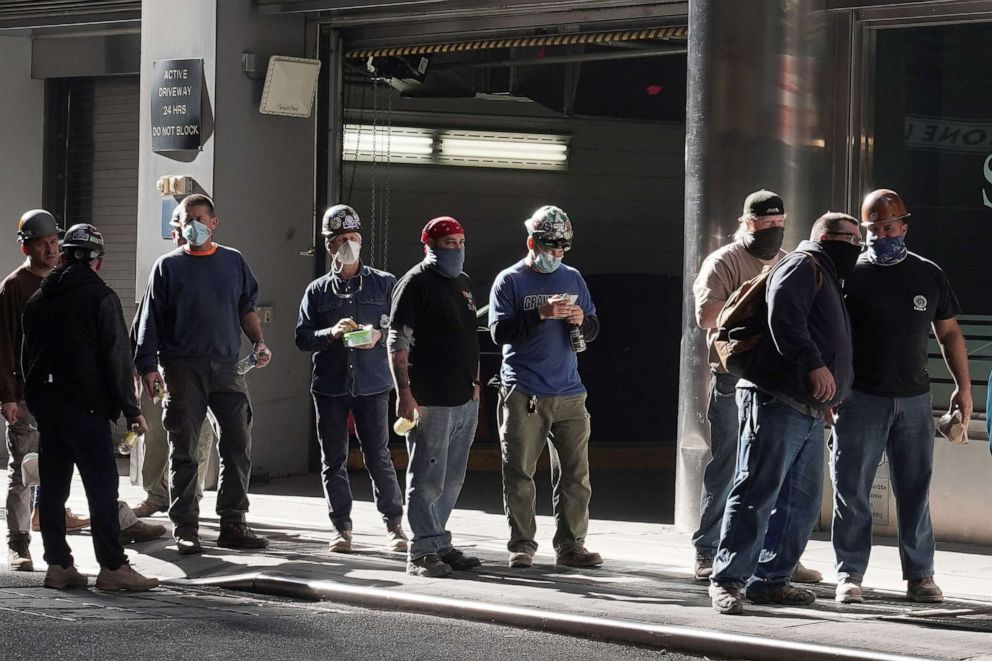
Construction workers wait in line for a temperature check to return to the job site after lunch, amid the COVID-19 outbreak, in the Manhattan borough of New York City, Nov. 10, 2020.
Carlo Allegri/Reuters

Nov 10, 2020, 4:19 PM EST

Antibody drug can keep patients out of hospital but should be reserved for high-risk: Officials

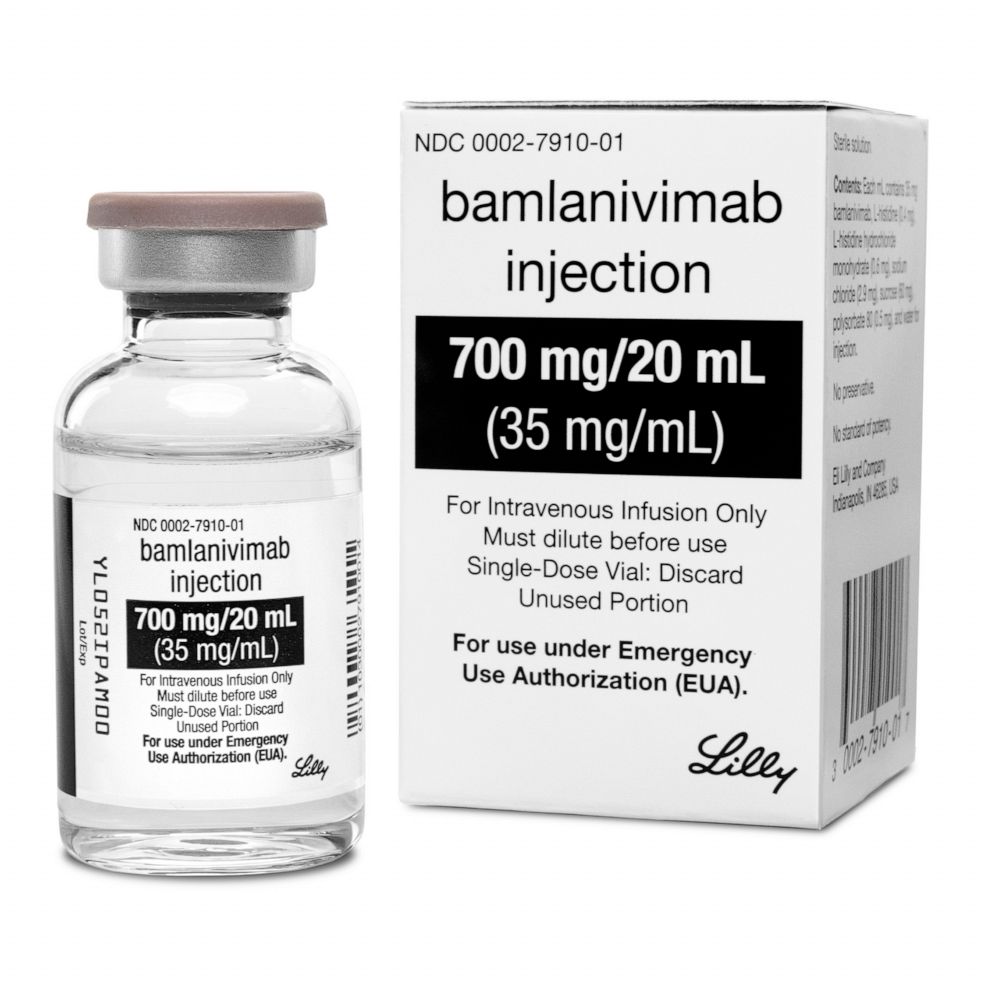
Eli Lilly's FDA-authorized monoclonal antibody drug takes an hour to infuse via IV and should be reserved for those at high-risk of getting sicker, senior government officials said at a briefing Tuesday.

PHOTO: This photo provided by Eli Lilly shows the drug Bamlanivimab. On Nov. 9, 2020, the FDA cleared emergency use of Bamlanivimab, the first antibody drug to help the immune system fight COVID-19.
This photo provided by Eli Lilly shows the drug Bamlanivimab. On Nov. 9, 2020, the FDA cleared emergency use of Bamlanivimab, the first antibody drug to help the immune system fight COVID-19. The drug is for people 12 and older with mild or moderate COVID-19 not requiring hospitalization.
Courtesy of Eli Lilly via AP

High-risk includes people with preexisting conditions like obesity, chronic kidney disease, diabetes and those older than 65.

Government officials said they hope the drug will help slow down hospitalizations.

The product’s distribution will begin this week with over 80,000 doses. The government has a contract to purchase 300,000 doses through December, with the option to purchase another 650,000 through June.

ABC News' Sony Salzman contributed to this report

Nov 10, 2020, 3:49 PM EST

Cases increasing 'exponentially' in Midwest

COVID-19 cases in the Midwest have increased “exponentially over the last four weeks,” according to Dr. Amy Williams, dean of the Mayo Clinic Practice in Minnesota.

The positivity percentage is now hovering around 20% in some Minnesota communities and over 30% in some Wisconsin towns, she said.

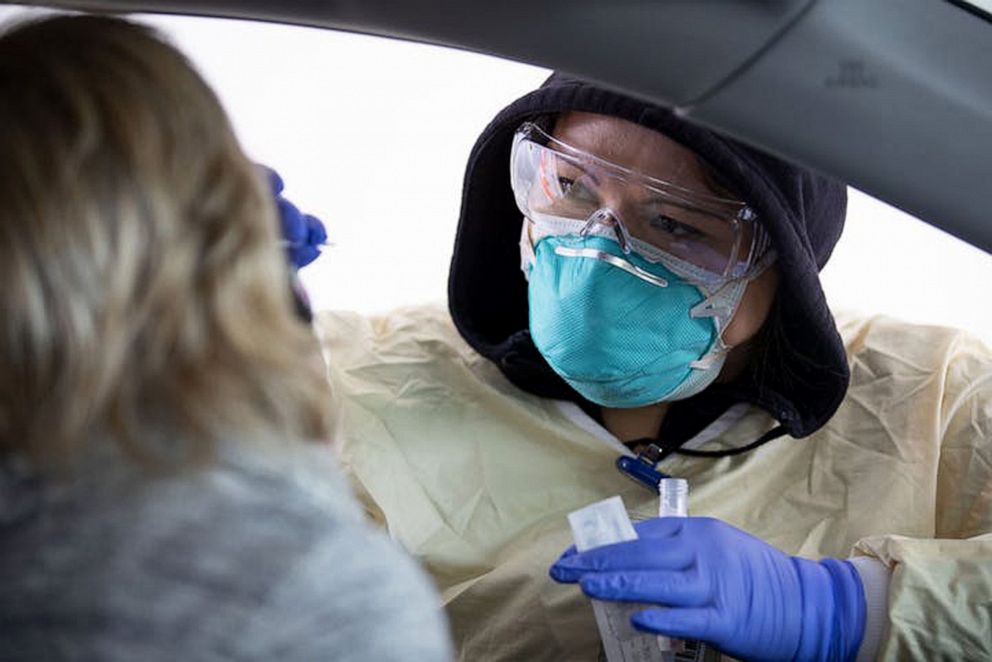
A medical assistant at St. Luke's Respiratory Clinic in Duluth, Minnesota administers a COVID-19 test to a patient in their drive-through testing site, Nov. 3, 2020.
Alex Kormann/Minneapolis Star Tribune/Newscom

When the rate of positivity “is over 10%, which is very, very serious… we start to worry about having the capacity to care for those that are positive," she said.

“Younger and younger patients" are also being hospitalized, she noted.

ABC News' Arielle Mitropoulos contributed to this report

Nov 10, 2020, 3:34 PM EST

New restrictions coming to San Diego, Sacramento

In California, COVID-19 numbers are on the rise.

In October the state had a 14-day positivity rate average of 2.9%. Now, the 14-day average is up to 3.7%.

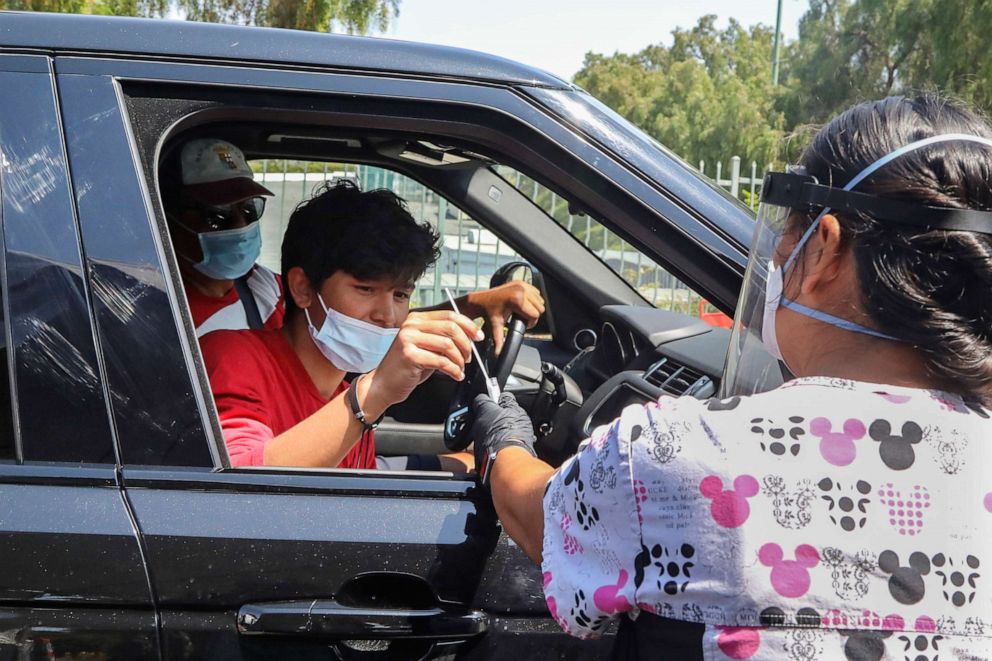
Jorge Angel Llamas, left, takes a COVID-19 test under the supervision of nurse Karen Barringer in Chula Vista, Calif., Aug. 28, 2020.
San Diego Union-Tribune/Sipa via USA Today Network, FILE

California's Sacramento, San Diego and Stanislaus counties are moving to the most restrictive COVID-19 tier, in which the rules include no indoor dining or gyms, officials announced Tuesday. Los Angeles County is already in the most restrictive tier.

The state’s top doctor is warning Californians to avoid Thanksgiving celebrations with people outside their household.

ABC News' Alex Stone contributed to this report

Related Topics

Sponsored Content by Taboola