Coronavirus updates: Over 7,000 Americans died in past week

The increase comes less than two weeks after Halloween.

Last Updated: November 18, 2020, 4:38 AM EST

A pandemic of the novel coronavirus has now killed more than 1.3 million people worldwide.

Over 53.2 million people across the globe have been diagnosed with COVID-19, the disease caused by the new respiratory virus, according to data compiled by the Center for Systems Science and Engineering at Johns Hopkins University. The actual numbers are believed to be much higher due to testing shortages, many unreported cases and suspicions that some national governments are hiding or downplaying the scope of their outbreaks. The criteria for diagnosis -- through clinical means or a lab test -- has also varied from country to country.

Since the first cases were detected in China in December, the virus has rapidly spread to every continent except Antarctica. The United States is the worst-affected nation, with more than 10.7 million diagnosed cases and at least 244,283 deaths.

Nearly 200 vaccine candidates for COVID-19 are being tracked by the World Health Organization, at least 10 of which are in crucial phase three studies. Of those 10 potential vaccines in late-stage trials, there are currently five that will be available in the United States if approved.

Latest headlines:

Here's how the news is developing. All times Eastern.
Nov 10, 2020, 6:47 PM EST

Texas sets new COVID daily case record

Texas health officials announced the most daily COVID-19 cases since the pandemic began Tuesday.

There were 10,865 new cases reported and 94 new deaths, according to the Texas Department of State Health Services. Texas hospitals have 6,170 confirmed COVID-19 patients, according to the Health Department.

The state has recorded 974,230 total cases since the pandemic began, health department data shows. Over the last month, 184,170 new cases were confirmed, according to the data.

There have been a total of 18,863 coronavirus-related deaths in Texas, according to the state. Over 1,500 deaths were recorded in the state over the last 30 days, according to the data.

ABC News' Gina Sunseri contributed to this report.
Nov 10, 2020, 6:29 PM EST

Fauci estimates average Americans can get vaccination by April

Dr. Anthony Fauci estimated during a CNN interview that people who are not high priority will be able to get vaccinated "probably by April, by the end of April."

The director of the National Institute of Allergy and Infectious Diseases said there are concerns that there may be a lot of people who do not want to be vaccinated right away.

"That is why we were talking that it might take well into the second and third quarter to finally get people to be convinced to get vaccinated," Fauci said.

He added that the incentive to get the vaccine will be increased by the treatment's efficacy.

"When you hear something is 90 to 95% effective it makes it more likely someone would want to get vaccinated," Fauci said. "I think you're going to get vaccinated within the first four months. I'd say by April you'll be able to get vaccinated."

Nov 10, 2020, 4:29 PM EST

South Dakota hardest-hit in US with 53.97% positivity rate

South Dakota is the hardest-hit state in the U.S. with a 53.97% positivity rate, according to Johns Hopkins University.

South Dakota is followed by Iowa with a 48.29% positivity rate and Kansas where there's a 41.27% positivity rate.

The state with the lowest COVID-19 numbers is Vermont, which has a 0.64% positivity rate.

The next safest states are Maine at 2.02% and New York, once the U.S. epicenter of the pandemic, with a 2.07% positivity rate.

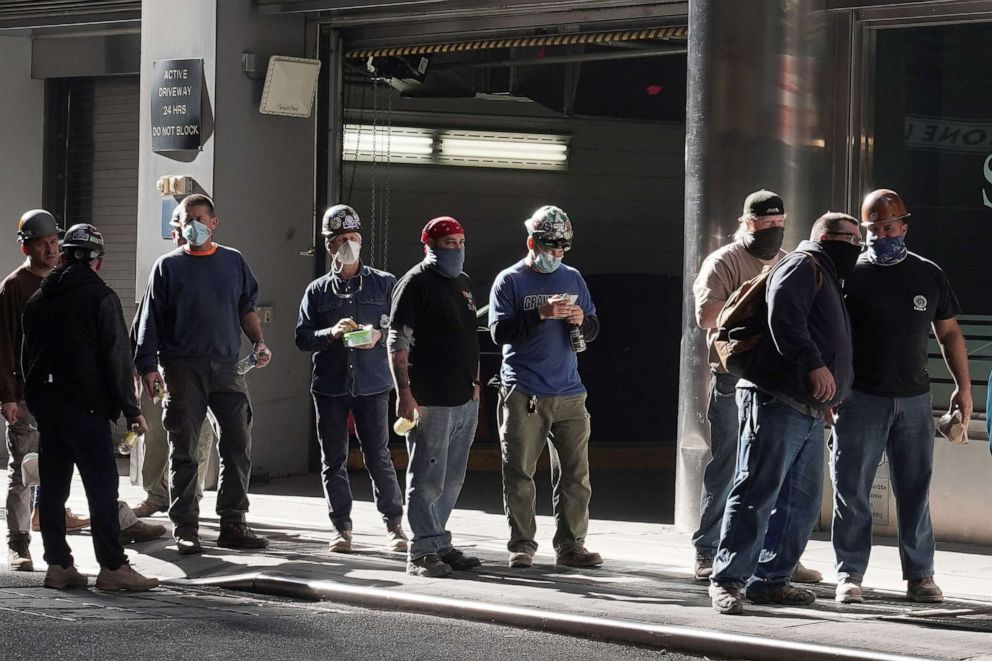
Construction workers wait in line for a temperature check to return to the job site after lunch, amid the COVID-19 outbreak, in the Manhattan borough of New York City, Nov. 10, 2020.
Carlo Allegri/Reuters

Nov 10, 2020, 4:19 PM EST

Antibody drug can keep patients out of hospital but should be reserved for high-risk: Officials

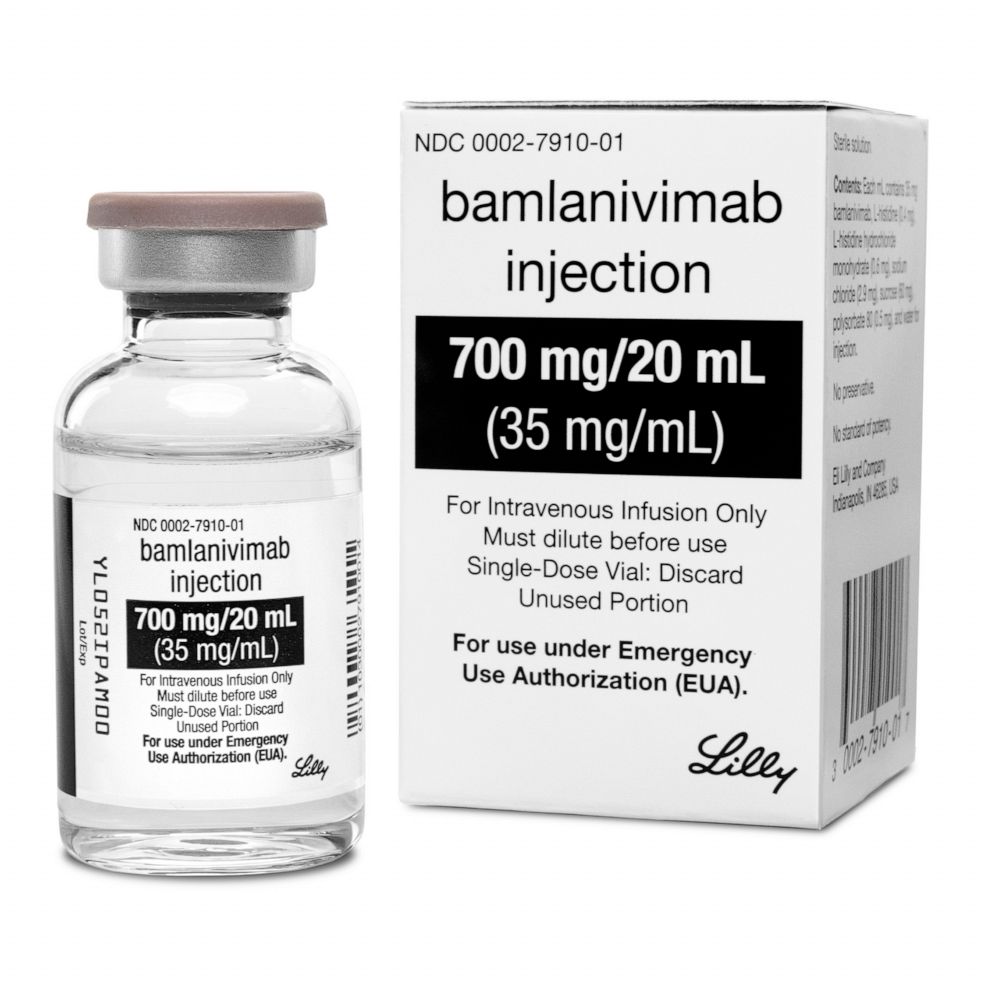
Eli Lilly's FDA-authorized monoclonal antibody drug takes an hour to infuse via IV and should be reserved for those at high-risk of getting sicker, senior government officials said at a briefing Tuesday.

PHOTO: This photo provided by Eli Lilly shows the drug Bamlanivimab. On Nov. 9, 2020, the FDA cleared emergency use of Bamlanivimab, the first antibody drug to help the immune system fight COVID-19.
This photo provided by Eli Lilly shows the drug Bamlanivimab. On Nov. 9, 2020, the FDA cleared emergency use of Bamlanivimab, the first antibody drug to help the immune system fight COVID-19. The drug is for people 12 and older with mild or moderate COVID-19 not requiring hospitalization.
Courtesy of Eli Lilly via AP

High-risk includes people with preexisting conditions like obesity, chronic kidney disease, diabetes and those older than 65.

Government officials said they hope the drug will help slow down hospitalizations.

The product’s distribution will begin this week with over 80,000 doses. The government has a contract to purchase 300,000 doses through December, with the option to purchase another 650,000 through June.

ABC News' Sony Salzman contributed to this report

Related Topics

Sponsored Content by Taboola