B-2 bombers dropped a number of Massive Ordnance Penetrator bombs -- known as "bunker busters" -- during the U.S. mission over Iran, a U.S. official confirmed.
A number of Tomahawk cruise missiles were also fired at targets inside Iran from a U.S. Navy submarine, the official confirmed.
Following the strikes, Trump addressed the nation, calling it a "spectacular military success."
Iran's supreme leader indicates attacks on Israel will not stop: 'Punishment continues'
In an early morning message local time, Iran’s supreme leader, Ayatollah Ali Khamenei, said the "punishment" of Israel will continue.
Khamenei did not mention the United States or President Donald Trump in his statement.
In this June 18, 2025, handout image, Iranian Supreme Leader Ali Khamenei addresses the nation in a state television broadcast in Tehran, Iran.
Office of the Supreme Leader of Iran via Getty Images, FILE
"The Zionist enemy has made a grave mistake, committed a great crime; it must be punished and is being punished; it is being punished right now," Khamenei wrote.
-ABC News' Will Gretsky
Jun 22, 2025, 7:11 PM EDT
FBI, DHS host call with governors over threat environment after Iran strikes: Sources
Senior FBI and Homeland Security officials hosted a conference call with some of the nation's governors and top law enforcement officials to discuss how the U.S. missile strikes in Iran impact an already dangerous threat environment, sources told ABC News.
The call included hundreds of state and local law enforcement officials from around the country.
An FBI official said that the agency's "posture is going to be enhanced," with the FBI asking more personnel to be in the office, and continuing to "canvas sources" and monitoring intelligence.
The FBI seal is shown in the election security command center at FBI headquarters on Nov. 4, 2024.
ABC News
Sources described the call with governors as short, and without a lot of specifics, saying there is currently no specific intelligence of a direct, credible threat against the U.S. homeland. It was meant to ensure that states are aware of the current threat environment and to encourage them to reach out to relevant state agencies, infrastructure partners and others who may be at risk, sources said.
The calls come after Homeland Security issued a bulletin calling on the public to report anything suspicious to officials with DHS Secretary Kristi Noem stating flatly that what’s happening in Iran brings the potential for increased threats to the homeland in the form of "possible cyberattacks, acts of violence and antisemitic hate crimes."
-ABC News' Mike Levine, Katherine Faulders and Luke Barr
Jun 22, 2025, 6:37 PM EDT
State Department issues 'worldwide caution' alert amid Middle East conflict
The State Department has issued a new worldwide caution alert prompted by the conflict between Israel and Iran, saying there is "potential for demonstrations against U.S. citizens and interests abroad."
“The conflict between Israel and Iran has resulted in disruptions to travel and periodic closure of airspace across the Middle East. There is the potential for demonstrations against U.S. citizens and interests abroad. The Department of State advises U.S. citizens worldwide to exercise increased caution,” the alert reads.
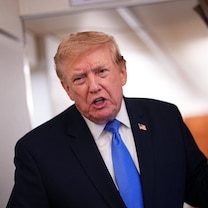
President Donald Trump addresses the nation, alongside Vice President JD Vance, Secretary of State Marco Rubio and Secretary of Defense Pete Hegseth from the White House in Washington, June 21, 2025.
Carlos Barria/Reuters
Earlier this month, the State Department issued a regional alert related to the conflict, advising Americans in North Africa and the Middle East to exercise increased caution.
In October 2023, the U.S. issued a similar worldwide caution alert stemming from the Oct. 7 attacks on Israel and ensuing military campaign in Gaza.
-ABC News' Shannon Kingston
Jun 22, 2025, 6:23 PM EDT
Iran's armed forces will decide 'nature and the scale' of response to strikes, UN envoy says
Iran's ambassador to the United Nations, Amir Saeid Iravani, condemned the United States' attacks on Iran during a meeting with the UN Security Council.
Iravani said the strikes on Iran's nuclear sites used the Non-Proliferation Treaty (NPT) as a "political weapon," calling it "aggression and unlawful action."
The ambassador warned that Iran's response would be determined by its armed forces. Iravani also denounced the assassination of Iran's General Qasem Soleimani.
"The timing, nature and the scale of Iran's proportionate response will be decided by its armed forces," Iravani said, adding, "All U.S. allegations against Iran are unfounded, with no legal basis and politically motivated."