US officials see 'limited' activity from Russia as prelude to larger offensive operations
The United States has seen "limited" Russian offensive operations southwest of Donetsk and south of Izium in eastern Ukraine, a senior U.S. defense official said Tuesday, describing the military activity as "preludes to larger offensive operations that the Russians plan to conduct."
"These are actual ground offensives, and they are being supported, of course, by some long-range fires, mostly artillery, which is right out of the Russian doctrine," the official said.
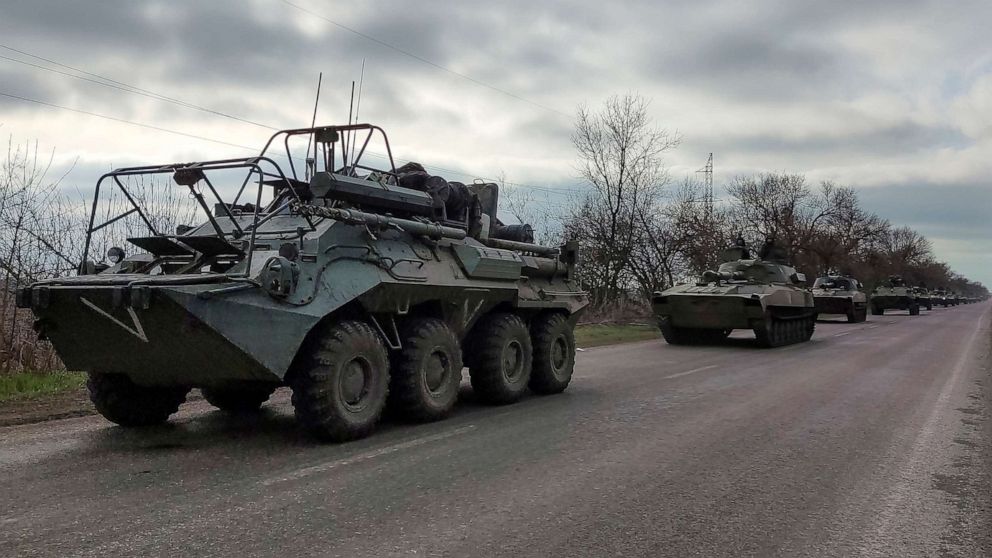
But while there is ongoing fighting in the region, a more devastating offensive strategy appears to be still in the works, according to the official.
Both Ukrainian President Volodymyr Zelenskyy and Russian Foreign Minister Sergei Lavrov have said Russia's new offensive has started in the Donbas region. But the U.S. defense official said it does not appear the new offensive has begun in earnest.
"We think that these offenses are preludes to larger offensive operations that the Russians plan to conduct," the official said. "So we're not pushing back on the notion that offensive operations have begun, but again, we think that this is a prelude of larger offensive operations that are potentially still in the offing here."
The Pentagon believes Russia's military is assessing the mistakes it made in fighting in the north, where it was plagued with logistical and supply problems. U.S. defense officials suspect Russia is conducting what they describe as "shaping operations" to set favorable conditions on the battlefield before beginning its new offensive in earnest.
"In other words, continue to reinforce, continue to make sure they have logistics and sustainment in place, continue to make sure that they have proper aviation and other enabling capability," the official said.
Over the last 24 hours, two Russian battalion tactical groups comprised of about 2,000 combat troops have been sent into Ukraine, according to the official. It's now estimated that 78 Russian BTGs are inside the country, all in the south and east.
-ABC News' Matt Seyler