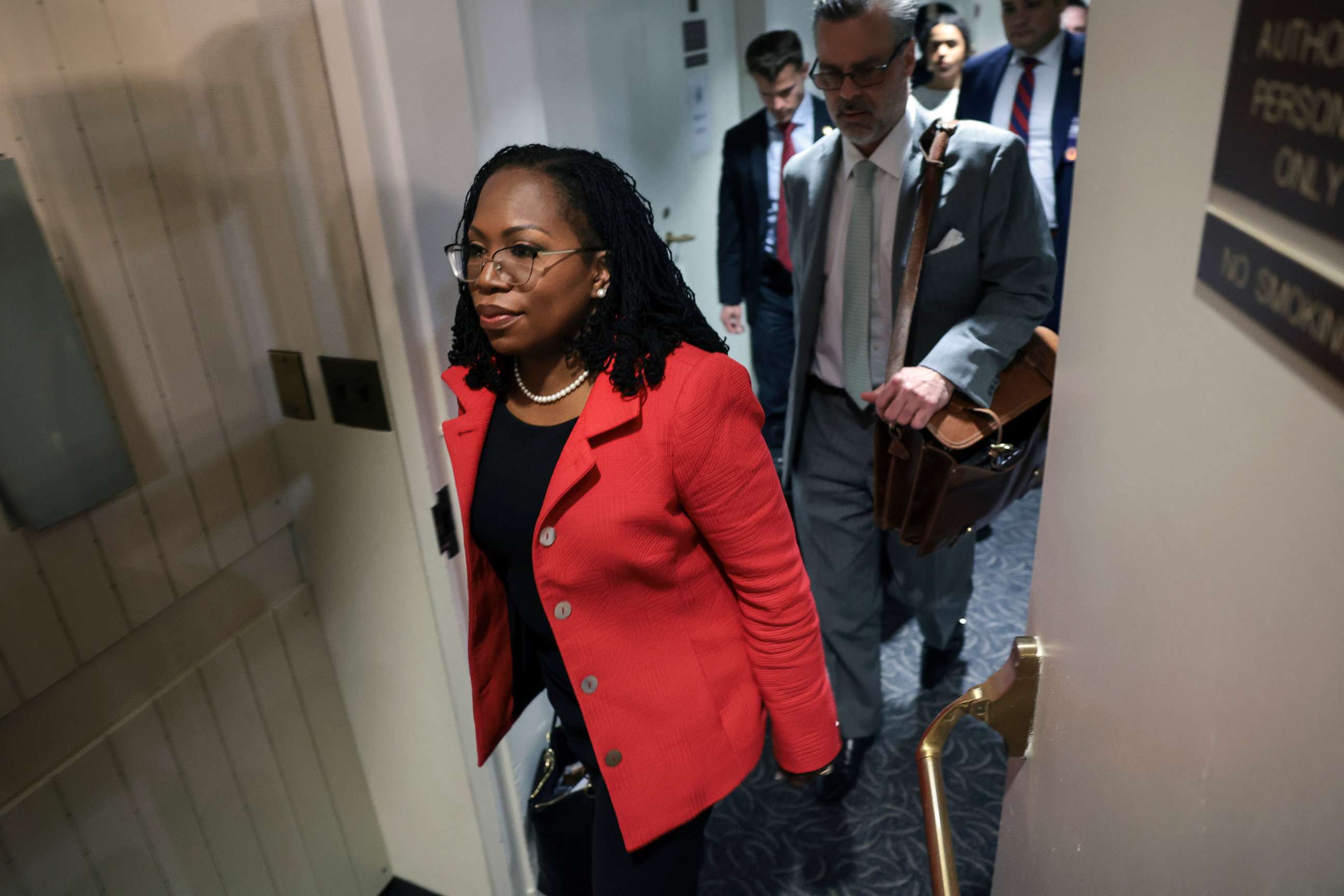
Jackson addresses her judicial philosophy
Hoping to disarm GOP attacks, Senate Judiciary Chairman Dick Durbin, D-Ill., posed the first question to Judge Jackson and gave her the opportunity to address her judicial philosophy after Republicans on Monday swiped at her for claiming previously that she doesn't have one.
"So would you like to comment at the outset, of those who are looking for a label, what your position is on judicial philosophy?" Durbin said.
Jackson replied that she has developed a methodology that she uses when approaching any case "to ensure that I am ruling impartially and that I am adhering to the limit on my judicial authority."
"I am acutely aware that as a judge in our system, I have limited power, and I am trying, in every case, to stay in my lane," she said.
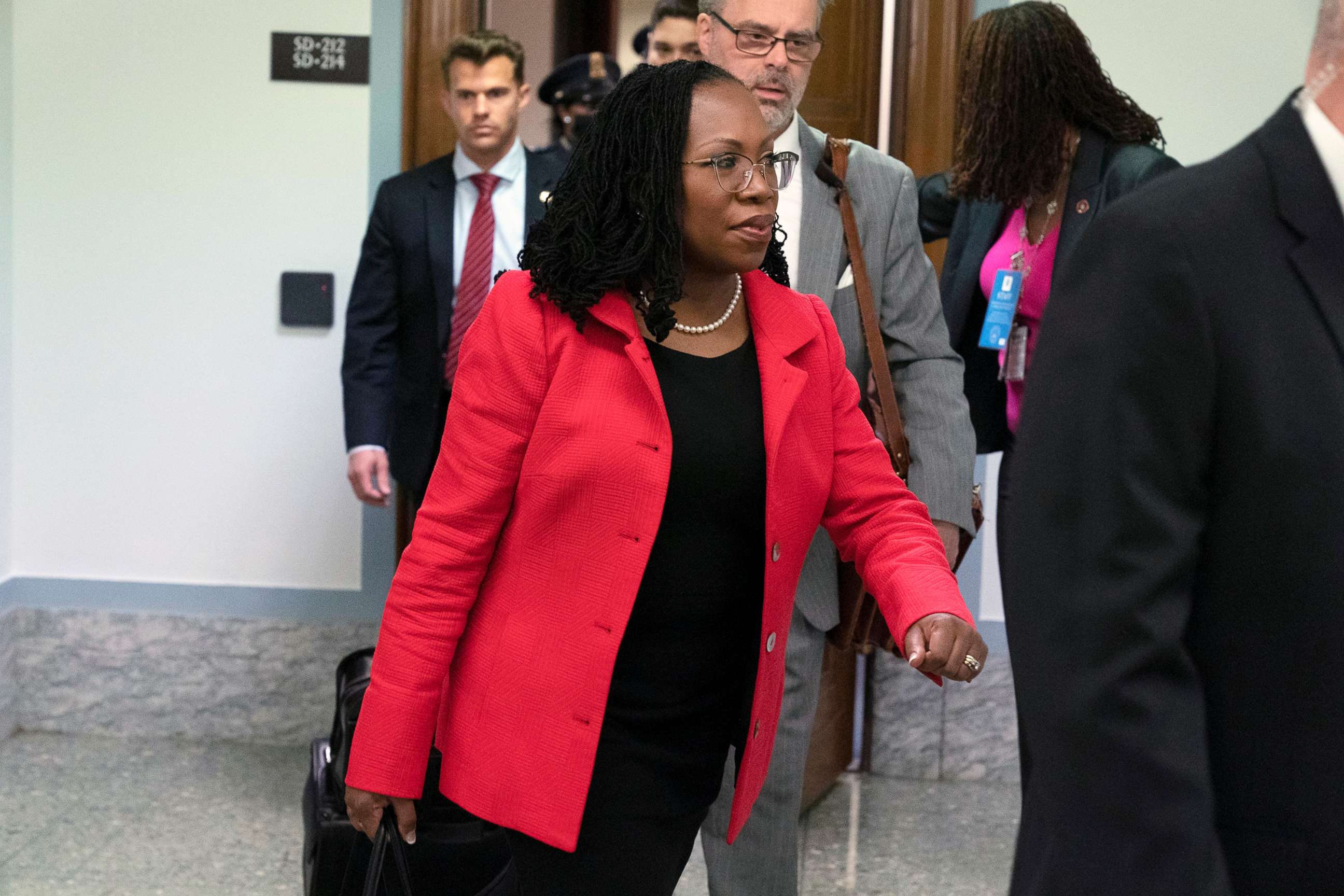
Without importing her personal views or policy preferences, Jackson explained that she follows three steps when approaching a case: First, she enters each from a position of neutrality. Next, she intakes the parties' arguments, and the last step, she said, is the interpretation and application of the law to the facts.
"The entire exercise is about trying to understand what those who created this policy or this law intended," she said. "As a lower court judge, I'm bound by the precedent. Even in the Supreme Court, if I was fortunate enough to be confirmed, there's stare decisis, a binding kind of principle that the justices look at when they're considering precedent. So, all of these things come into play in terms of my judicial philosophy."