Highlights from Senate vote to confirm Ketanji Brown Jackson

The Senate voted 53-47 in a bipartisan vote on Jackson's nomination.

Last Updated: April 7, 2022, 5:29 PM EDT

Judge Ketanji Brown Jackson, the first Black woman nominated to the U.S. Supreme Court in its 233-year history, was confirmed by the Senate in a 53-47 vote Thursday.

She got three Republican votes, marking a bipartisan victory for President Joe Biden and his high court nominee.

Mar 22, 2022, 3:23 PM EDT

Cruz raises critical race theory in questioning Jackson about 'The 1619 Project'

Sen. Ted Cruz, R-Texas, began his questioning by noting that he and Judge Jackson have "known each other for a long time" as former classmates at Harvard Law School who also worked together on the Harvard Law Review.

"We were not particularly close, but we were always friendly and cordial," Cruz said.

"We were," Jackson replied.

Cruz went on to take issue with Jackson referencing journalist Nikole Hannah-Jones' "The 1619 Project," which won the Pulitzer Prize and was published in the New York Times, in a speech at the University of Michigan Law School for Martin Luther King Jr. Day in 2020.
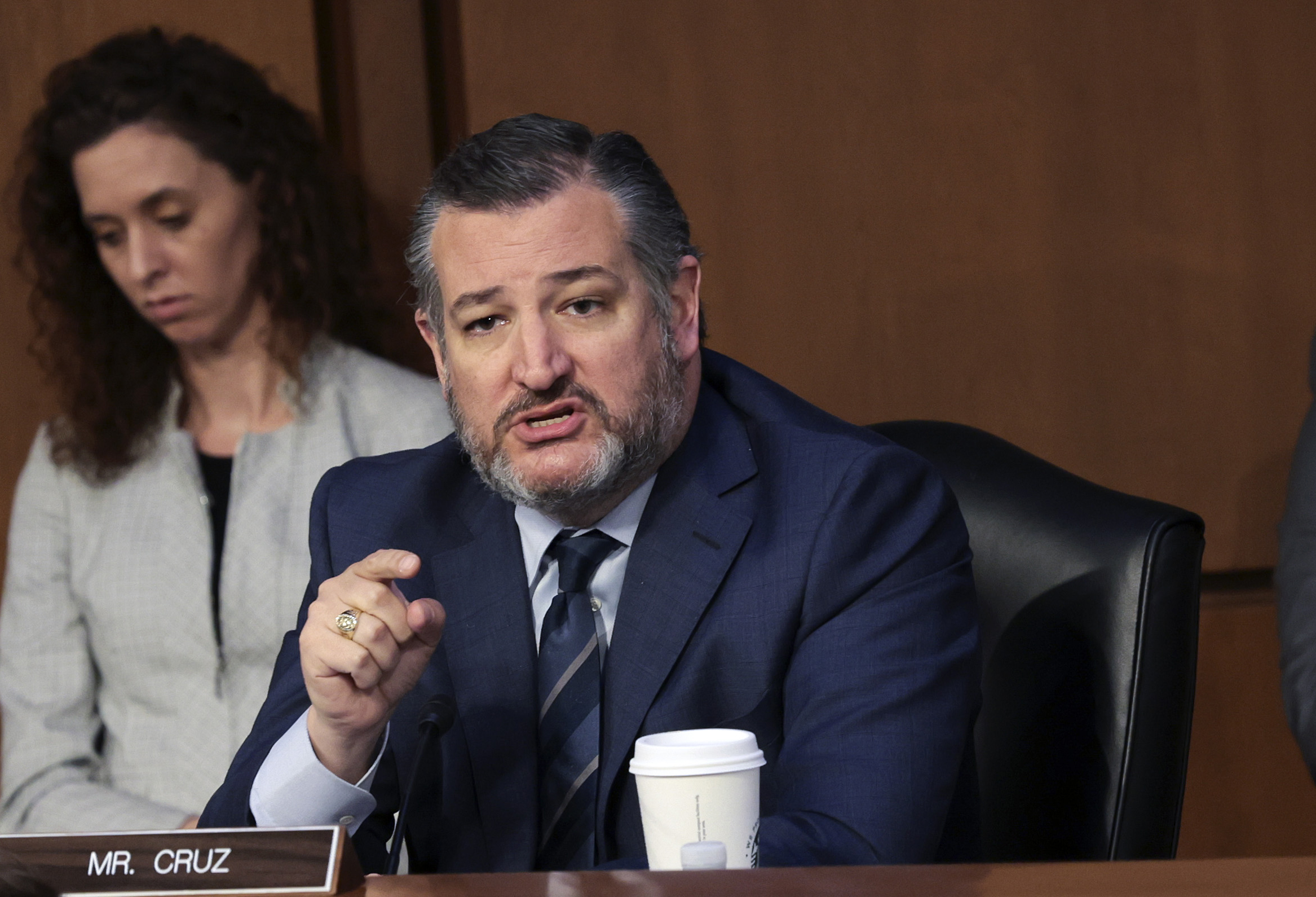
Sen. Ted Cruz delivers remarks during the Senate Judiciary Committee confirmation hearing for U.S. Supreme Court nominee Judge Ketanji Brown Jackson on Capitol Hill, March 21, 2022, in Washington, D.C.
Win Mcnamee/Getty Images

Jackson said most of the speech focused on Black women in the civil rights moment but one slide referenced Jones' work which she had called "provocative."

"It is not something that I've studied. It doesn't come up in my work," Jackson said. "I was mentioning it because it was, at least at that time, something that was talked about and well-known to the students that I was speaking to at the law school."

Cruz then launched into an attack on critical race theory and asked Jackson to explain what it means -- allowing her the chance to say critical race theory does not have an impact on her work.

"Senator, my understanding is that critical race theory is -- it is an academic theory that is about the ways in which race interacts with various institutions," she said. "It doesn't come up in my work as a judge. It's never something that I've studied or relied on and it wouldn't be something that I would rely on if I was on the Supreme Court."
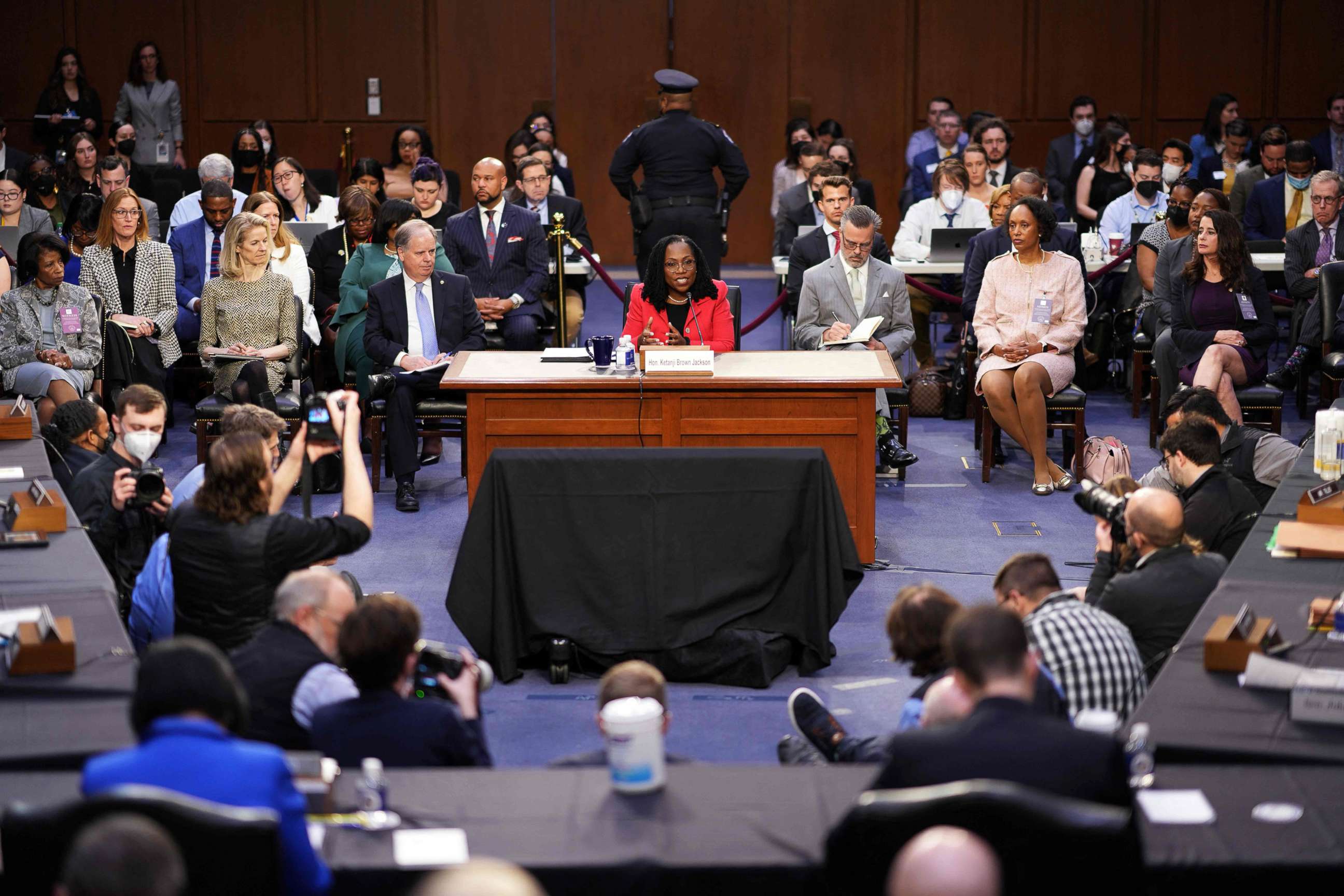
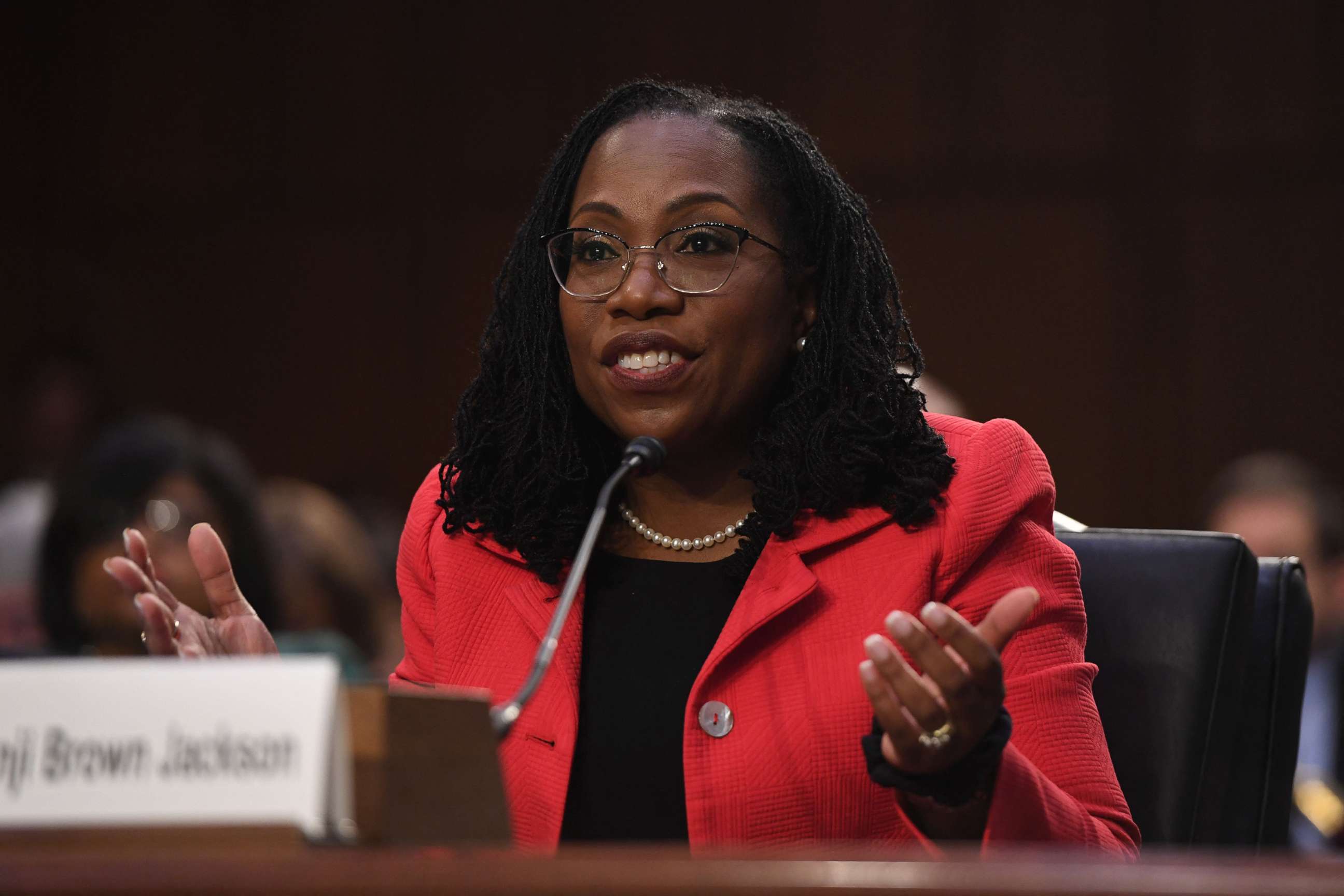
Judge Ketanji Brown Jackson testifies on her nomination to become an Associate Justice of the Supreme Court during a Senate Judiciary Committee confirmation hearing on Capitol Hill in Washington, D.C, March 22, 2022.
Doug Mills/POOL/AFP via Getty Images

Mar 22, 2022, 2:38 PM EDT

Jackson says public confidence in the court is ‘crucial’

As public polling in recent years shows deteriorating confidence in the Supreme Court, Sen. Amy Klobuchar, D-Minn., asked Judge Jackson how she sees her role in maintaining the people's confidence in the judiciary system.

Jackson characterized the issues of public confidence in the court as "crucial."

Sen. Amy Klobuchar questions Supreme Court nominee Ketanji Brown Jackson during her Senate Judiciary Committee confirmation hearing on Capitol Hill in Washington, March 22, 2022.
Alex Brandon/AP

"That's the key to our legitimacy in our democratic system, and I'm honored to accept the president's nomination, in part, because I know it means so much to so many people. It means a lot to me," she said.

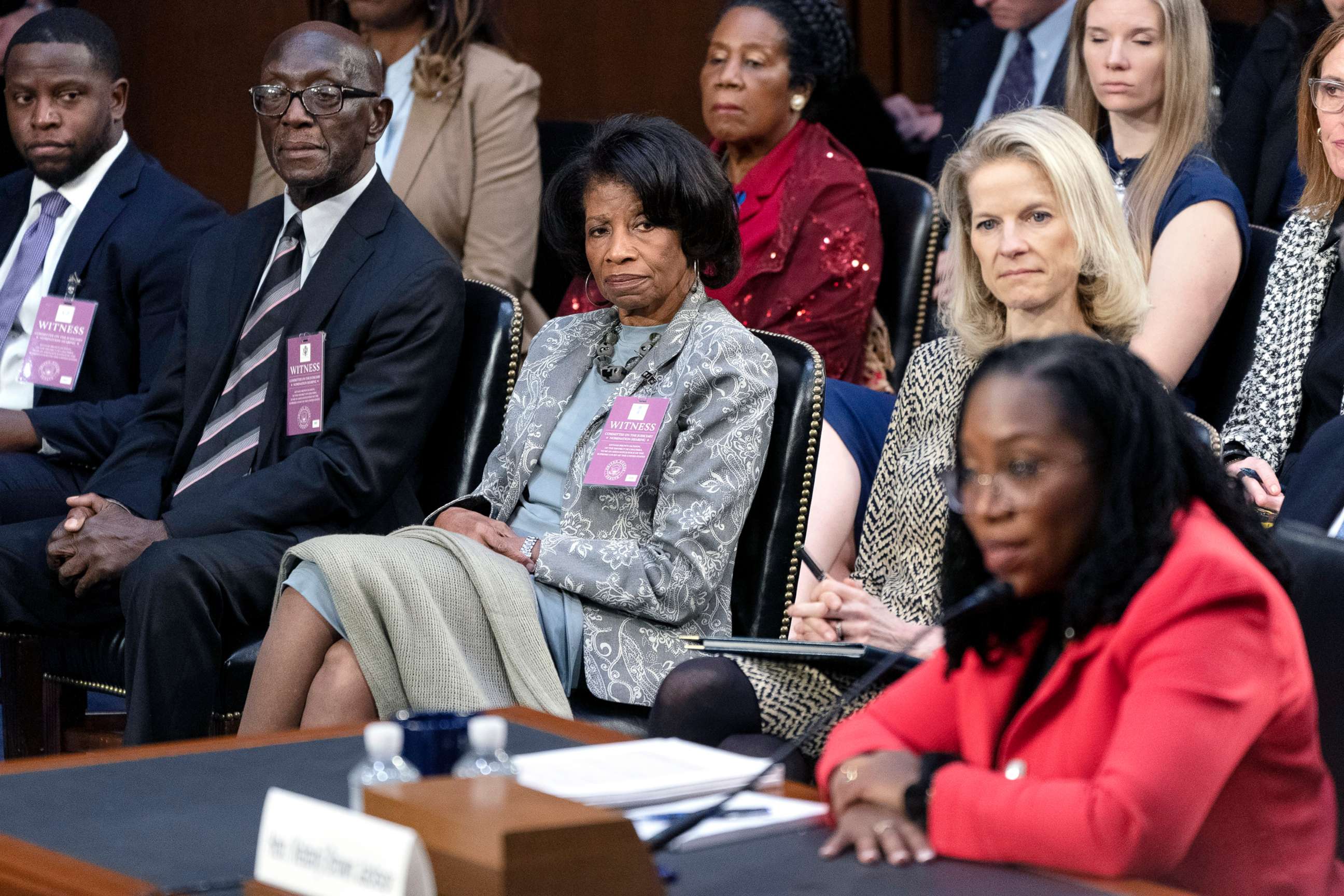
"I am here standing on the shoulders of generations of Americans who never had anything close to this kind of opportunity – from my grandparents who had just a grade school education but instilled in my parents the importance of learning, and my parents, who I've mentioned here many times already, who were first in their families to get to college," she said, as her parents, Johnny and Ellery Brown, looked on in the chamber.

PHOTO: Supreme Court nominee Ketanji Brown Jackson, right, testifies as her family from far left, brother Ketajh Brown, and parents Johnny and Ellery Brown, listen, March 22, 2022 on Capitol Hill in Washington.
Supreme Court nominee Ketanji Brown Jackson, right, testifies about how her parents attended segregated schools, as her family from far left, brother Ketajh Brown, and parents Johnny and Ellery Brown, listen, during the second day of her confirmation hearing, March 22, 2022 on Capitol Hill in Washington.
Jacquelyn Martin/AP

"This nomination against this backdrop is significant to a lot of people, and I hope that it will bring confidence -- it will help inspire people to understand that our courts are like them, that our judges are like them doing the work and being a part of our government," she added.

Mar 22, 2022, 2:29 PM EDT

Jackson explains federal guidelines for child pornography offenders

As Republicans attempt to paint Judge Jackson as "soft on crime," Sen. Mike Lee, R-Utah, pressed Biden's nominee on whether she was too lenient in handing down sentences to child pornography offenders.

Jackson disagreed with that characterization and explained why below-guidelines sentences are so widely used: Federal sentencing laws set by Congress dictate that judges look at its sentencing guidelines and impose a sentence "no greater than necessary."

"As I said before, these are horrible cases that involve terrible crimes and the court is looking at all of the evidence consistent with Congress' factors for sentencing," Jackson said. "The court is told that you look at the guidelines but you also look at the nature and circumstances of the offense, the history and characteristics of the offender."

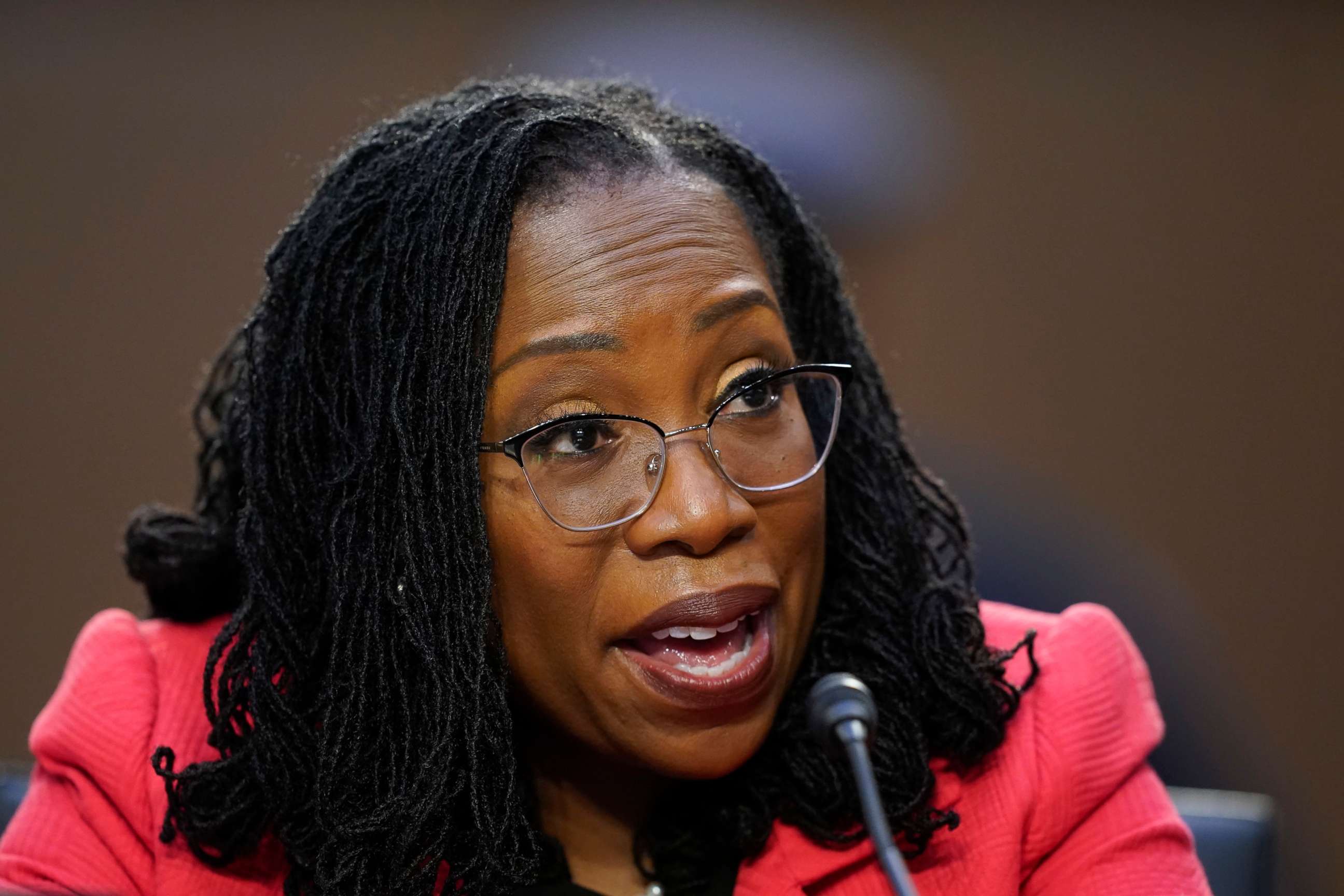
Supreme Court nominee Ketanji Brown Jackson testifies during her Senate Judiciary Committee confirmation hearing on Capitol Hill in Washington, March 22, 2022.
Alex Brandon/AP

"In most cases, if not all of the cases, the government is asking for a sentence below the guidelines because this guidelines system is not doing the work in this particular case," she added.

The U.S. Sentencing Commission, the bipartisan body created by Congress to set federal sentencing rules, said in its 2021 report that suggested prison terms for defendants convicted of possessing child pornography -- as opposed to producing the materials -- have "been subject to longstanding criticism from stakeholders and has one of the lowest rates of within-guideline range sentences each year."

To make that point, Sen. Amy Klobuchar, D-Minn., following Lee, gave Jackson the opportunity to say whether it surprised her to hear that Republican judges supported have also given out similar sentences in child pornography cases.

"No, senator, it would not surprise me because these cases are horrific, and there's a lot of disparity because of the way the guidelines are operating in this particular area," Jackson said. "But in every case, in every case that I handled involving these terrible crimes, I looked at the law and the facts. I made sure that the victim -- the children's perspectives -- were represented, and I also imposed prison terms and significant, significant supervision and other restrictions on these defendants."

Mar 22, 2022, 2:55 PM EDT

Durbin argues Jackson didn't call Bush a 'war criminal' as Republicans contend

Senate Judiciary Chairman Dick Durbin, D-Ill., kicking off the afternoon session, used his position as chair to defend Judge Jackson against the misleading allegation raised by Sen. John Cornyn, R-Texas, that she called former President George Bush and former Secretary of Defense Donald Rumsfeld "war criminals."

Before the break, Cornyn, at first, complimented her demeanor and then asked "how in the world" she could call Bush and his defense secretary war criminals in legal briefs. Jackson seemed stumped, saying she didn't remember that reference.

After saying he had done "research," Durbin said Cornyn appeared to be referencing Jackson's representation of a Guantanamo Bay detainee as a federal public defender.

Judge Ketanji Brown Jackson testifies on her nomination to become an Associate Justice of the Supreme Court during a Senate Judiciary Committee confirmation hearing on Capitol Hill in Washington, D.C, March 22, 2022.
Saul Loeb/AFP via Getty Images

"During your service as a public defender, you filed several habeas petitions against the United States naming former President Bush and Rumsfeld in their official capacities," Durbin said. "You were representing people who were wrongly classified as civilians and were combatants of the United States," he added, going on to explain the alien tort statute.

"So, to be clear there was no time where you called President Bush or Secretary Rumsfeld a war criminal," Durbin said.

"Correct, senator," Jackson replied, with a smile.

-ABC News' Trish Turner

Related Topics

Sponsored Content by Taboola