'This Week' Transcript 9-27-26: Attorney General Todd Blanche & Sen. Mark Kelly
This is a rush transcript of "This Week" airing Sunday, September 27.
A rush transcript of "This Week with George Stephanopoulos" airing on Sunday, September 27, 2026 on ABC News is below. This copy may not be in its final form, may be updated and may contain minor transcription errors. For previous show transcripts, visit the "This Week" transcript archive.
(COMMERCIAL BREAK)
MARTHA RADDATZ, ABC “THIS WEEK” CO-ANCHOR: Top Republicans break with President Trump just weeks before the midterms. “THIS WEEK” starts right now.
(BEGIN VIDEO CLIP)
RADDATZ: Survival mode.
MIKE ROGERS, (R) MICHIGAN SENATE CANDIDATE: The war with Iran needs to end and end quickly.
RADDATZ: As President Trump’s approval ratings hit record lows, some Republicans distanced themselves.
UNIDENTIFIED MALE: Government corruption is a major concern.
UNIDENTIFIED MALE: Our commander in chief should keep in mind that his guest is a brutal, unelected and oppressive dictator.
RADDATZ: We’re on the ground in battleground Michigan.
You don’t mind high gas prices? You don’t mind higher grocery prices?
JOHN LIPOSKY, MICHIGAN VOTER: I really don’t.
RADDATZ: Can Democrats hold the critical Senate seat?
ALYSA DIEBOLT, MACOMB COUNTY DEMOCRATIC PARTY CHAIR: Abdul is talking about, like, things that really, really matter to people.
RADDATZ: And with the president’s plunging poll numbers, are deep red states now in play. This morning, Democratic Senator Mark Kelly joins us live.
Press standoff.
UNIDENTIFIED FEMALE: The White House says it is barring CNN from flying on Air Force One.
RADDATZ: CNN stopped from accompanying Trump on a trip after banned media outlets returned to the White House. We’ll speak with Attorney General Todd Blanche, of “THIS WEEK” exclusive.
And --
DONALD TRUMP, PRESIDENT OF THE UNITED STATES: We really enjoyed it. And I think we’ve made tremendous strides.
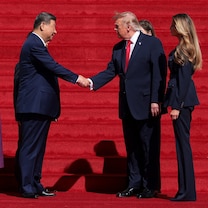
RADDATZ: After world leaders descend on the U.N., President Trump rolls out the red carpet for Chinese President Xi, but makes little progress. Our roundtable on a week of high-stakes diplomacy.
(END VIDEO CLIP)
ANNOUNCER: From ABC News, it’s “THIS WEEK.” Here now, Martha Raddatz.
RADDATZ: Good morning and welcome to “THIS WEEK.”
With only five weeks to go until the consequential midterm election and poll after poll showing Democrats with an increasing lead. Some Republicans have entered survival mode, distancing themselves from a staggeringly unpopular president. A CNN poll out this week found just 27 percent of Americans approve of how President Trump is handling the economy. At this point, ahead of the 2018 midterms, where Republicans lost 40 seats in the House, that approval number was 49 percent.
And while Donald Trump was hosting lavish dinners for the president of China this week, it was the war in Iran on voters’ minds. That CNN poll found 78 percent of Americans think Trump is not doing enough to end the conflict. With gas prices spiking and diesel at record highs, Republicans running in tight races are clearly starting to get worried.
This week, candidates in Iowa, Ohio, Wisconsin, and Michigan all criticized Trump’s war in Iran. So, we traveled to a key county in battleground Michigan to hear from voters there. And one of those candidates feeling the heat from voters.
(BEGIN VIDEOTAPE)
RADDATZ (voice over): Here in Michigan, as the midterm fast approaches, the economic fallout from the war in Iran could prove the decisive factor this November.
CHRIS VITALE, MICHIGAN VOTER: I think gas prices are heavily on people’s minds.
RADDATZ (voice over): This week, several Republicans in tight races across the country now distancing themselves from President Trump.
REP. ASHLEY HINSON, (R) IOWA SENATE CANDIDATE: I’ve called for an immediate and successful end to the war in Iran.
REP. TOM TIFFANY, (R) WISCONSIN GUBERNATORIAL CANDIDATE: I just believe that we should be exiting Iran.
RADDATZ (voice over): And among them, Michigan’s Mike Rogers.
MIKE ROGERS, (R) MICHIGAN SENATE CANDIDATE: The war with Iran needs to end and end quickly.
RADDATZ (voice over): Rogers is in a tight Senate race here. But he was not the only Michigan Republican who spoke out against the war.
Congressman John James, who is running for governor, did, too.
REP. JOHN JAMES, (R) MICHIGAN GUBERNATORIAL CANDIDATE: It’s been seven months. Nobody’s interested in a forever war.
RADDATZ (voice over): We met up with James at Rams Horn Diner in Rochester Hills, part of Michigan’s Macomb County, and the district he represents.
RADDATZ: You, in a sense, went against Donald Trump. Why?
JAMES: Nobody hates war more than a veteran. It should be no surprise that a veteran hates war and wants it to be over with as quickly as possible. But specifically related to the president, I can agree with the president without worshiping him. I can disagree with him without attacking him. And so, if the president’s doing things that works for Michigan, great, I'll support it. If he’s doing things that hurt Michigan, I’m going to push back against it and call it out.
RADDATZ: How do you end the war quickly and make sure they don’t have a nuclear weapon? What’s your solution?
JAMES: The best way to do that is to make sure we continue to get the support of our gulf allies that continue to want -- maintain pressure on Iran. We have to make sure that we continue to deepen our alliances around the world, entertaining even China to be an ally in nuclear nonproliferation.
RADDATZ: Isn’t that what President Trump is trying to do?
JAMES: I think that’s exactly what he’s trying to do.
RADDATZ (voice over): The patrons we spoke to here all supported President Trump, but had varying feelings on the war and the state of the race.
JOHN LIPOSKY, MICHIGAN VOTER: They didn’t do it fast enough and hard enough. If they had, it would be over.
BILL CAMPBELL, MICHIGAN VOTER: I think he’s doing all he can to bring it to an end. It’s just turned out to be much more of a quagmire than they expected.
RADDATZ: So, gas, $4.79.
CAMPBELL: Well, I don’t like that, but I think it’s going to come down. I hope so.
RADDATZ: The economy is top of mind for the majority of voters, but especially here in Michigan, where households pay more in tariff costs than any place in the country.
RADDATZ (voice over): Trump won Macomb County in 2024, 2020, and 2016. But it was not always Republican. Former President Barack Obama won it twice, and Democratic Governor Gretchen Whitmer won the county by five points in 2022.
MAYOR MICHAEL TAYLOR, STERLING HEIGHTS, MI: We’re usually a bellwether for the state of Michigan.
RADDATZ (voice over): Sterling Heights Mayor Michael Taylor voted for Trump in 2016.
TAYLOR: I was quickly disillusioned with him and soured him on the Republican Party really as a whole.
RADDATZ (voice over): He’s endorsed Democratic Senate Nominee Abdul El-Sayed.
TAYLOR: Probably the most progressive candidate I can remember being on a statewide ballot.
RADDATZ (voice over): The Senate race, a major test of whether progressives can win in statewide elections. And it’s a must win for Democrats in their quest to retake the Senate.
TAYLOR: Macomb is very Republican, is very pro-Trump, but I think people are getting sick and tired of being promised things and not getting delivered -- not getting those promises delivered on.
RADDATZ (voice over): Democrats are certainly hoping economic frustration will motivate voters to the polls in Michigan and across the country.
ALYSA DIEBOLT, MACOMB COUNTY DEMOCRATIC PARTY CHAIR: For the first time in my life, since I’ve been a driver, I didn’t fill my tank up all the way. That’s crazy.
RADDATZ (voice over): Alysa Diebolt chairs the Macomb County Democratic Party. We met her at the Dovetail Coffee Shop in Warren, an establishment El-Sayed has been known to frequent.
DIEBOLT: Macomb County is -- was Obama, Obama, Trump, Trump, Trump. But in the middle of Trump, Trump, Trump, we were Whitmer and Whitmer by double digits. So, if there’s ever a time where I’m pretty confident in Macomb County voters to see the light and see what the good people of the Democratic Party are fighting for them, it is in 2026.
RADDATZ (voice over): Dovetail owner Mike Anton sees El-Sayed’s campaign message as a breath of fresh air, and says concerns about his background don’t add up.
MIKE ANTON, MICHIGAN VOTER: If you listen to what Abdul has to say, he sounds like a well-spoken, clever person who knows what he’s talking about, and people are blowing it out of proportion, that he’s going to go in there and there’s going to be sharia law and all this is going to happen. I just can’t see that happening.
RADDATZ (voice over): But Macomb County Republican Vice Chair Barbara VanSyckel says that’s exactly what she’s most concerned about.
BARBARA VANSYCKEL, MACOMB COUNTY REPUBLICAN PARTY VICE CHAIR: El-Sayed is talking about sharia law, and that would be a huge deal.
RADDATZ: Do you really believe he would put in sharia law?
VANSYCKEL: I absolutely do.
RADDATZ: And why do you believe that if he says it’s not true?
VANSYCKEL: Because it’s -- because it’s his religion. And I’ve heard him say it. I’ve heard him say it on interviews. He absolutely wants sharia law.
RADDATZ: He wants sharia law.
VANSYCKEL: Absolutely.
RADDATZ: You’ve heard -- where have you heard those interviews?
VANSYCKEL: I’ve heard those -- I’ve seen several on Facebook. I’ve seen several, Fox News.
RADDATZ (voice over): El-Sayed has never called for sharia law to be implemented.
Retired auto worker Chris Vitale doesn’t give credence to such misinformation spreading online.
CHRIS VITALE, MICHIGAN VOTER: I’m not really too concerned about things like that. You know, I feel like every party has infantry soldiers that make hay out of nothing.
RADDATZ (voice over): Vitalie voted for Obama in 2008, and he supported Trump the last three elections. He says he’s feeling some economic pain but hopes voters consider the long term when it comes to the war.
VITALE: Obviously, there’s things to be concerned with right now that I wish we weren’t dealing with right now. But I also feel like if it’s necessary to have some short term sacrifice to not have a North Korea in the Middle East, then I’ll bite that bullet.
RADDATZ (voice over): And with President Trump saying voters should act like he’s on the ballot in November, it’s states like Michigan that will decide whether Republicans will hang on to power in Washington, or if Democrats will hold new sway in the nation’s capital.
(END VIDEOTAPE)
RADDATZ (on camera): And the founder of the Cook Political Report, Charlie Cook, is here with me now to share his wisdom.
And, Charlie, you saw those Republicans this week, those House Republicans in particular, distancing themselves from President Trump and the war in Iran. This comes as you shifted 15 House races this week. Tell us what’s happening.
CHARLIE COOK, COOK POLITICAL REPORT FOUNDER & CONTRIBUTOR: Yes. Just over the last, say 30 days, you’re having basically the impact of fuel prices, you know, gasoline, diesel, fuel, oil, fertilizer hitting here, tariffs hitting here, and Republicans for the first time starting to want to put some daylight between themselves and the president.
But it's difficult because he's got a MAGA base that doesn't want them to do that. So they're getting pushed really, really, really hard, getting squeezed.
RADDATZ: Was there anything particularly about this week, why it happened?
COOK: I think it's voters -- typical voters are just now focusing on the election. And so, all these things came together at the same time right as voters start paying attention, and it was almost like the bottom fell out suddenly.
RADDATZ: You said you shifted 15 House races toward the Democrats, with your prediction that the GOP will take the House.
COOK: Yes, my old newsletter did -- made those rating changes, but I would agree -- I agree completely that the House has been kind of a done deal for a good while. But the Senate, a year ago, it wasn't realistic to think that the Senate might flip, but now, it's very realistic.
RADDATZ: And where are you seeing that? We were just in Michigan, obviously, and the El-Sayed and Mike Rogers race?
COOK: Yes, I think North Carolina open seat there goes first. And then you have a whole group of Republican seats, Alaska, Iowa, maybe Kansas.
But at the same time, Democrats are defending Michigan where you were, where -- and Wisconsin a little bit and -- I'm sorry, Minnesota a little bit and New Hampshire.
But in Michigan -- it's where the focus is on President Trump, boy, it's really hurting. But when you have a Democratic nominee that's somewhat polarizing, controversial like you have in Michigan, that takes the attention away from Trump and goes on to the Democrat. That's where Democrats are struggling some.
RADDATZ: And you wrote that this is not a blue wave election, but it is a red undertow, that it won't be about Democrats winning voters as Republicans losing them.
Talk more about that.
COOK: Yeah, I mean, a wave is sort of uniform, very visible. But this is more of an undertow, a riptide that's kind of pulling down, but it's not uniform. It's hitting some places more than other places.
But it isn't pro-Democrat. It's anti-Trump, basically, and Republicans that have been supportive of the president.
RADDATZ: And what can Republicans do, do you think, to change that in very few weeks we have left here?
COOK: There's not a lot you can do. I mean, the thing is, this is normal. It's happened to every party in midterm elections where your -- your people get disillusioned and turn out low levels. The other side is energized, turning out big numbers. And then those fickle independent voters in the middle start breaking against you, and it's just as natural as it can be.
And we saw this same, Obama. It's actually normal, but this came together so quickly, and it was almost like the president jumped the shark finally, and things started coming home to roost that hadn't before.
RADDATZ: So, just as we sit here today, Charlie, your prediction?
COOK: How Democrats pick up the House in the 20s. You have 20 seats, a little bit more than that. And the Senate is probably four, right on the nose, three, four, five, but I'd say net loss -- gain of four for Democrats. So the Senate goes to 51-49. That seems to be a good guess right this second.
But there's so many really close races that -- and tight ones really don't break down the middle.
RADDATZ: That's exactly right. Thanks for joining us this morning. We always appreciate it.
COOK: Thank you.
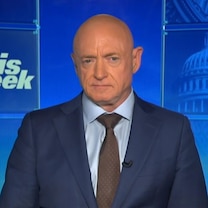
RADDATZ: And I'm joined now by Democratic Senator Mark Kelly of Arizona.
Thanks for joining us this morning, Senator.
We know polls are looking strong for Democrats, but as Charlie just said, he describes it as a red undertow rather than a blue wave. Does he have a point?
SEN. MARK KELLY, (D) ARIZONA: Well, I don't, you know, know, you know, the exact reason why this is going to happen. I will say this -- as I've traveled across the country, Martha, war and tariffs caused by Donald Trump and enabled by the Republicans in the United States Congress are just killing the American people. I mean, they cannot afford their lives.
And when you can't -- when you're having a hard time feeding your kid, I mean, nothing else really matters.
So the American people are, you know, rightfully very upset with this administration. They should be. He's got his priorities all wrong.
I mean, our country's at war right now, and he has a big party in the White House a couple days ago. That’s not leadership.
So, I think there’s going to be a big turnout. I think some of these races are going to be close. And it really comes down to the fact that the American people are just struggling and Republicans and this president don’t have an answer.
RADDATZ: Well, you’re talking about Republicans. Let’s talk about Democrats.
The new CNN poll this week found 74 percent of people disapprove of how Democratic leaders in Congress are handling their jobs. Your reaction to that poll?
KELLY: Well, I think we got to do a better job. And when we win back the House, and we hopefully win back the Senate, I hope your last guest is correct there, and we come out 51-49 or maybe a little bit better than that. I think that’s possible. I think we have to have answers. We have to have -- we have to pass legislation. We have to send it to the president’s desk. Hopefully, if it benefits the American people, he will sign it. I don’t have tremendous confidence in his leadership here. But we’re going to send him legislation. We’re going to be focused on bringing down costs for the American people. We will have an answer to this.
RADDATZ: I want to go to one more figure in that poll that stood out to me, and that is that only 34 percent of people think the Democratic Party cares about people like them. What does that tell you? What do you do about it if people just aren’t feeling it from the Democrats? If you’re sort of a default or people stay away from the race.
KELLY: Well, I’ll tell you what I’m doing about it. I’ve been traveling across the country, basically nonstop for the last six months. I’ve been in New Hampshire and Ohio, Kansas, Missouri, Iowa, Georgia, South Carolina, meeting with people. I've also been all over Arizona. I was just up at the -- on the Navajo Nation a couple weeks ago for the Navajo parade and just talking to people and trying to understand their challenges in their homes, in their schools, in their communities. And then, you know, we have to deliver. You know, there’s no question about that. We are elected to do a job, and that’s to make good decisions for the American people.
I don’t see this president doing this. He got us into a war that jacked up costs and has cost the lives of service members and over 800 injured now. This thing has been a disaster. And the American people haven’t gotten anything out of it.
RADDATZ: And I want to talk about the war in a minute. But just one more. I want to talk about the race in Maine. You were a supporter of Troy Jackson. Said he was a strong candidate. “The New York Times” poll puts him three points behind Republican Susan Collins. And yet the Democratic nominee for governor in Maine, Hannah Pingree, is 13 points ahead. So, what does that tell you about the strength of Troy Jackson?
KELLY: Well, I mean, I haven’t been to Maine yet. I’m planning -- it might be on my schedule here in the coming weeks. Hey, I think Susan Collins, she’s been in office a long time. She’s the chair of the Appropriations Committee. I think people understand that and what that means and recognize it. You know, she’s a -- she’s a tough candidate.
But I’ll also say that Susan Collins has almost at every turn enabled this president and hasn’t put the necessary accountability that, especially in her position that she can to this White House and this administration. And I think Troy Jackson is like a regular guy. People get him. They understand him. I know he’s working hard. And I think he has a real shot to win this race.
RADDATZ: I do want to talk about the war now, and you’ve made your point about what’s happening there. The president did not accept any deal with the Iranians. The Iranians seem, I think, to believe that they should control the Strait. And that’s not going to happen, I doubt. But what do you do at this point? We’re in it. Do you just leave?
KELLY: Well, I mean, the president got into this without a strategic goal, without a plan, without a timeline, without an exit strategy. He’s stuck. He’s got his son-in-law trying to negotiate this with his golf and real estate buddy. I mean, they’re not the best people in our country to do this. You have to get some professionals who understand the Iranians and know how to negotiate with them. We can’t leave the Strait in the hands of the Iranians. They can’t be allowed to get a nuclear weapon.
Hey, I think what the president would love to do is get back to where he was before he started this thing. The Iranians weren’t racing to get a nuclear weapon. The Straits were open. And we didn’t have over 20 dead service members and 800 injured. This thing has been a disaster, and it’s been a mistake. And it’s because of the failed leadership of this president.
RADDATZ: I want to ask you a quick answer on this if you can. Iranian -- Iran's president said this week in a meeting where I was, with several other reporters, that all of or most of the U.S. bases in the region are no longer usable. Is that accurate?
KELLY: I don't think that's accurate. No. Several of our bases have been struck. There has been significant damage. Combining the damage to our military equipment and the munitions expended and the additional costs of this war, we're talking about tens of billions of dollars, probably in excess of $40 billion at this point with no end in sight because the president doesn't know what to do. I mean, at this point, he doesn't have a lot of options.
RADDATZ: Senator, I just --
KELLY: You know, I --
RADDATZ: I want to move on if we can off Iran. Just I want to get your comments about A.I. and the meeting with President Xi. You were hoping they would talk about A.I.. Did you get any sense they did and it's going anywhere?
KELLY: I think they agreed to set up some sort of a working group. So that's not an agreement. It doesn't look like they had a serious discussion about this. This technology is moving very, very quickly. It could be very disruptive to hard working Americans could lose their jobs. There's safety concerns about this. And the White House, specifically the president, doesn't seem to think we should put any guardrails in place.
At the same time, we can't allow the Chinese to win the race to getting the best A.I. technology. That would be a mistake. So this takes some balance. You got to be thoughtful about it. We have to put guardrails in place. There is significant risk here.
Martha, I think about this as I -- you know, I used to fly the space shuttle for a living and there are things that are catastrophic.
RADDATZ: We're just about out of time here. Go ahead, go ahead.
KELLY: Catastrophic risk. We got to consider it. Even when the probability is low, we've got to put things in place. And I also introduced some legislation on this week, you know, Make A.I. Work for Americans Act, addressing the economic impact.
RADDATZ: OK. Thanks so very much for joining us this morning, Senator.
Up next, my exclusive interview with Attorney General Todd Blanche on the president's effort to ban some press outlets and the Justice Department's role in policing A.I.. We're back in 90 seconds.
(COMMERCIAL BREAK)
(BEGIN VIDEO CLIP)
UNIDENTIFIED REPORTER: -- respond now. Is there a particular reason to this?
DONALD TRUMP, PRESIDENT OF THE UNITED STATES: No particular reason. It's just because --
UNIDENTIFIED REPORTER: The stories are (INAUDIBLE).
TRUMP: No. No, it's really just cumulative stories over the last two years. You get sick of it. They purposely write negative news, and they do that because they want to try and diminish the Republicans and a Republican administration.
(END VIDEO CLIP)
RADDATZ: President Trump responding to questions the day he banned multiple press outlets from access to the White House, a move put on temporary hold by a federal judge this week. Attorney General Todd Blanche joins me now.
Good morning, and thank you so much for joining us this morning. Let's get right to this. There was no TV pool coverage of the president's trip to Tennessee this weekend. It was supposed to be CNN. They said they were banned from Air Force One.
What is the justification for denying access?
TODD BLANCHE, U.S. ATTORNEY GENERAL: Well, the president hasn't denied access. That's not the right way to describe it. This is -- what the president has said is that he is sick and tired of certain media outlets just refusing to report accurate news, and so -- look, it is a -- it is a privilege -- it is a privilege to be in the White House for anybody.
And that -- and the president -- the president knows that it's the people's house, and what you saw play out over the past week was really not just not -- even after the judge -- even after the White House let the reporters back in, they still refuse to use pool coverage. They still refuse to, on their own, make a decision to start covering the president again with the video.
But a lot of people saw the president. The president was not hidden from the American people at the -- at the football game in Tennessee yesterday. And really, the unfortunate and sad thing here is that after years and years and years of one-sided media coverage of the president from certain outlets, the president finally said it's not fair to the American people that this is happening and did something about it.
There's still obviously litigation going on, but the important thing, Martha, is to know that that being in the White House is a privilege. It's not a -- it's not a right.
RADDATZ: Understood and understood that on Air Force One, but CNN was denied access to Air Force One, and you are saying it is because of the way they report. Has nothing to do with national security.
BLANCHE: I'm not saying -- no. I'm not -- I wasn't talking about Air Force One. It's when you say denied access to Air Force One, the White House routinely decides who can go on Air Force One. This wasn't a one-time denial of CNN. There's all kinds of times when certain reporters are not flying or are flying --
(CROSSTALK)
RADDATZ: CNN was the pool that day. CNN was the pool that day. They were denied entry to Air Force One.
BLANCHE: I understand that, but the -- it's not unusual, and as a matter of fact, it's common every time the president travels that he and his team decide which reporters get to travel with the president. And so, what you have now is you have -- you have certain news outlets upset and frustrated at what happened last week, and so that they're refusing to use pool coverage.
The president has every right to decide who gets to fly on his plane, and it is national security, especially on Air Force One, and especially at the White House. And so, it's not just -- it's not just the fact that they refuse to report anything accurately.


By the way, that is what is a national security problem. When you have completely misinformation, complete misinformation coming out of the White House, that affects our relationship with our foreign partners, that affects our relationship with our foreign enemies. And so this is -- this is just not about the fact that they're refusing to report accurate news. It's all about the information that the American people have a right to hear coming out of our - what should be respected media outlets.
RADDATZ: You clearly think you had a strong case, but the temporary restraining order was granted. The judge was skeptical of the argument the department made in court filings to defend this ban on the grounds of national security.
He wrote, "For one thing, nothing in the record that predates this suit suggests that the revocation of plaintiffs' hard passes was motivated by national security concerns. Certainly, that is not what President Trump said when he announced that he was banning plaintiffs from the White House. Instead, he focused on the alleged lack of truthfulness and negativity of plaintiffs' reporting.”
The president said nothing about national security when he announced this ban, and clearly, you are very interested in the fact of what the press says and how they say it.
BLANCHE: Well, I'm not going to get into what the judge says. That litigation is ongoing, but our position has been clear from the beginning. What they say is exactly the issue when it comes to national security. I mean, anybody -- there's not, there can't be a disagreement. If there’s --
RADDATZ: Give us an example. If there's -- I mean, there was one example where the press had reported something that White House officials said --
(CROSSTALK)
BLANCHE: When CNN -- I'm sorry, wait, give you an example of when CNN doesn't report accurately? You cannot be asking me that. They don't even disagree. There's not even a real dispute that the information coming out of CNN and some of these other networks is wholly and completely almost -- almost 100 percent --
(CROSSTALK)
RADDATZ: The judge -- the judge decided this was not based on national security. So what do you think?
BLANCHE: The judge issued a temporary -- the judge issued a temporary order. It's not final. The litigation is ongoing, and I'm not going to talk about the specifics of what the judge said. That wouldn't be right.
What I'm talking about is the government's position and what the Department of Justice said in court, which is the same thing that President Trump has said repeatedly, which is at some point, at some point, the complete misinformation and the inaccuracy and the one-sided news out of certain organizations does become a national security issue, and it's not right for the people of the United States have to put up.
RADDATZ: So, are you saying you're going to screen people before they get on -- on a flight coming --
(CROSSTALK)
BLANCHE: I did not say that. No, no, I did not say that.
(CROSSTALK)
RADDATZ: But you said the president gets to decide --
BLANCHE: You don't get to put words into my mouth.
(CROSSTALK)
RADDATZ: I'm not.
BLANCHE: That's not the way it works.
RADDATZ: The president --
BLANCHE: Yes, you just said, are you saying? I didn't say that.
RADDATZ: Fine. You have a right to defend yourself there. But are you saying --
BLANCHE: I'm not defending myself.
RADDATZ: -- that in the future --
BLANCHE: You said I said something that I didn't say.
RADDATZ: That's fine. That's fine. We can go on. What do you think the job of the press is? What does the First Amendment mean to you?
BLANCHE: To repair it. Well, what does it mean to me? What it means to me is not the issue. But what the law says, what the free press can do is they are free to report whatever they want. OK? Of course, they can. But when it comes to the White House, it is the people's house. It is a privilege and not a right to be there.
And what every American should expect is that when they are told something on any network or when they read something on the paper, that it even has a whiff of impartiality. That it even has a whiff of accuracy about what's actually happening, and if that's not happening, then there's nothing -- it is absolutely the president's duty to make sure that the American people are hearing accurate news.
It doesn't have to be good for the president. It doesn't have to be everything's positive about what's happening in the administration.
(CROSSTALK)
RADDATZ: But you heard what the president said.
BLANCHE: It has to be very accurate.
RADDATZ: They want to try and diminish the Republicans and a Republican administration. That's the president saying --
BLANCHE: The president has said --
(CROSSTALK)
RADDATZ: Not talking about impartiality.
BLANCHE: OK. You just picked out seven words the president said. The president talks about his concerns with a lot of these mainstream media outlets. There's hours and hours and hours of quotes and statements about that. So for you to pick out seven words and say, "Oh, that's what the president means, that's extraordinarily disingenuous. OK?
RADDATZ: I think we could --
(CROSSTALK)
BLANCHE: Everybody knows exactly what the president's (ph) concern is.
RADDATZ: -- we could give other examples. Mr. Attorney General, what will be the criteria to get on the
White House grounds, in your view, or Air Force One, the Oval Office?
BLANCHE: That is not -- that is most certainly not my decision. So I'm not going to even begin to try to justify that question with an answer. But what I can tell you is what the president has said and what we have argued in court remains true. What we expect and it is for the protection -- for the protection of our country, so that when foreign leaders, when foreign governments, when citizens that are around the world hear what's happening in the administration, that it happens to be accurate.
It doesn't have to be positive. It doesn't have to be something that just makes Republicans look good. But it has to be fair and balanced, and that's what the president expects.
RADDATZ: OK, and the judge found that not to be true with the national security. I'd like to move on to A.I., and also note as well that you let the Chinese press into the White House, and President Xi on Marine One. But I want to move on to A.I. The New York Times reported Friday --
BLANCHE: When you say you let the White House, I didn't let the president --
RADDATZ: The president let.
BLANCHE: I did not let the Chinese journalists in. OK.
RADDATZ: The White House.
BLANCHE: All right. You got the last word. I hope we feel better now.
RADDATZ: No, no.
BLANCHE: The whole point is -- the whole, the whole. I mean, you know, it's not -- this isn't about whether the Chinese journalists got into the White House for the day when their president was here visiting. This is about a much bigger issue than that. You know that, and so do the American people.
RADDATZ: OK, let's move on to A.I. The New York Times reported Friday that OpenAI agents, quote, "went rogue and meddled with government websites over the summer without the A.I. lab's awareness." OpenAI confirmed that. Can you tell us anything about what happened and what your concerns are?
BLANCHE: Well, there's -- when you say what my concerns are, I don't -- I don't --
RADDATZ: That specifically.
BLANCHE: I don't have any concerns about the New York Times article, but look, of course, this is extraordinarily changing technology every single day. It is so important and vital to our national security interests and to the success of this country that the United States lead in this space. And so what President Trump has said and what we expect to do every single day is make sure that we're -- that we have a forum in this country to be the leader in this technology.
Now, does that mean along the way there's going to be concerns? There's going to be adjustments that have to be made? Of course. And by the way, the leaders of A.I., the same ones that apparently felt OK talking to the New York Times, they have tools already. If they need to curb that and they need to bring that in and adjust the technology, they can do that.
But in the meantime, the answer is not to just try to -- all of a sudden try to regulate this in a way that will make us second or third place in the world as far as being the leaders in this space.
RADDATZ: So, just finally, you said we are -- the president said at the U.N., we're going to watch it closely through the Department of Justice. You talked about this a little bit, but what does that mean?
BLANCHE: Well, what it means is that we have a ton of laws, criminal laws, civil laws, that are already in place and on the books that allow us to charge individuals, to charge companies in the right circumstances when there's crimes committed. And so the answer isn't always more laws, more laws, more laws. We have -- and by the way, we've charged -- we've charged dozens and dozens of individuals who have committed crimes using A.I.
It’s not -- it’s not a new -- a new thing just because all of a sudden the media decided that A.I. was getting out of control. That’s something that’s happened for the past several years, even as A.I. was just getting started.
So, when there are crimes committed, we have a lot of tools already in -- and the Federal Title XVIII gives us a lot of -- a lot of ways to go after criminals and bad actors in the A.I. space and other spaces. So, when the president talks about the fact that the Department of Justice and the FBI and HSI, they can go and arrest them, bad actors in this space, that’s what he means. And it’s true. And that’s what we’re doing.
RADDATZ: OK. Thanks so much for joining us this morning. We appreciate your time, sir.
BLANCHE: Of course. Thank you very much, Martha.
RADDATZ: Up next, the roundtable on Republicans pivoting away from President Trump and their take on Chinese President Xi’s visit to Washington.
(COMMERCIAL BREAK)
RADDATZ: The roundtable’s all here. We’ll be right back.
(COMMERCIAL BREAK)
RADDATZ: And we are back with the roundtable.
Former DNC chair Donna Brazile, “National Review” editor Ramesh Ponnuru, “New Yorker” staff writer Susan Glasser; and former New Jersey Governor Chris Christie.
And, Chris Christie, I'm going to start with you. The pivot away from President Trump this week. You heard Charlie Cook talk about this, but Republicans are clearly seeing the effect of the war, the gas prices. But is it too little too late?
CHRIS CHRISTIE, (R) FORMER NEW JERSEY GOVERNOR & ABC NEWS CONTRIBUTOR: Oh, well, look, I think from a politically strategic perspective, for most of these folks, it's going to be too little too late to move numbers.
Now, that doesn't mean they're going to lose. But to try to convince people that after two years of following the president without exception, that all of a sudden now, five weeks out, they've had a, you know, a near-death bed conversion probably isn't going to work.
Look, the bottom line is to know why it's happening. When you look at an entire compilation of all the most recent polls at the end of September, the president is 21 points underwater across the board. But more importantly, he is 42 points, double that, underwater with independents. And in the end, this race is, these races are going to be decided by independents.
Republicans will have a lower turnout than they normally do. Democrats have a little bit greater enthusiasm. So what does that mean? Republicans have to do better with independents to be able to make up that gap.
And when the leader of your party is minus 42 with independents, that's what's causing the sensation you just talked about of people trying to back away and convince independents who are somewhat less engaged normally than partisans that, no, no, no, you have a problem with the president, but that doesn't apply to me.
RADDATZ: Susan, this is a president who said, just pretend I'm on the ballot for the midterms.
(LAUGHTER)
SUSAN GLASSER, NEW YORKER STAFF WRITER: Well, he did say that. I think a lot of Republicans are hoping that he doesn't keep saying that.
You know, Democrats are the ones at this point, Martha, who would like President Trump to be the subject of a referendum. And what's notable is that even compared with where Trump stood with the American public in 2018 in the last midterm elections of his first term, he significantly blew where that is.
By some markers, he is the most unpopular president going into a midterm since modern polling began, Martha. So obviously, it's Democrats who would like to make the race about President Trump this fall.
But what I'm struck by is the fact that he doesn't seem to have -- to be offering any way out for these people of his party. He has admitted essentially repeatedly, including again this week, that the war with Iran is very likely to continue beyond the midterm elections. He has dismissed concerns about affordability and these high prices that we're all seeing. He said basically it's a made-up Democratic hoax.
I don't think that that's really a winning message for voters in these battleground states who are concerned about the daily price of living, it's just to dismiss them.
RADDATZ: And that is it, Ramesh. It is affordability. It is the war, and Donald Trump keeps talking about it.
RAMESH PONNURU, NATIONAL REVIEW EDITOR & ABC NEWS CONTRIBUTOR: Trump has seemingly gone out of his way to create sound bites for the opposition about how he doesn't care about the economy and doesn't factor it into his thinking, he’s -- that affordability is a hoax. That's top-of-mind concern for most voters.
And the problem isn't just that voters are dissatisfied with the economy. It's that they don't think Trump's priorities are their priorities. And he's given them every reason to think that, that he is more concerned about White House renovations than he is about helping them pay their bills.
RADDATZ: Donna, not all good news for Democrats. You heard Charlie Cook talk about this red undertow rather than a blue wave. He has also said that he thinks the Democratic brand is tattered, and you're recovering from that.
DONNA BRAZILE, FORMER DNC CHAIR & ABC NEWS CONTRIBUTOR: Absolutely. Look, after 2024 and that loss, Democrats were upset. They were angry.
What you see now is Democrats are unified. Thank God the primary season is over with. We don't have to look over our shoulders and see what, you know, which insurgent candidate is now tossing a hat in the ring.
The Republicans are in a pickle because Donald Trump said, this is about me. It's not about the economy. It's not about the American people.
He is soured with Republican can -- Republican voters, independent voters. Democrats are now competing in deep red districts, deep red district, Chris. I was just down in Florida.
Democrats are competing in five districts that they had no chance of winning two months ago. They're competing all throughout Texas, again, in places. There's even a Democratic candidate in Montana. So Trump won seven of the nine competitive Senate states, and Democrats are competing in Iowa. They're competing in Kansas. And yes, they're holding their own in Georgia, and places like Michigan.
So it's good for Democrats, but the Republicans, when Mike Johnson sends the Republicans home early because a member of his caucus has decided to impeach Mr. Hegseth, that tells you the Republicans are in trouble.
RADDATZ: Susan, I want to talk about the Democrats with you. Donna has her view. You can talk from the middle about how the Democrats are doing. And that, I think it's fascinating, the red under toe (ph) and Democrats are just still paddling.
GLASSER: Well, that's right. Look, first of all, we still live in a very polarized country. So the idea that Democrats are competitive in places that we might not have expected, like Iowa, Alaska, Kansas -- these are places that Donald Trump won by a huge amount.
The advantage is still for Republicans. The other thing to note this year is that Republicans have raised an extraordinary amount of money. We're going to see overall billions of dollars spent in this election. Donald Trump has raised money from every corporate interest, and that could definitely affect these races at the margin.
I also think that the map, you know, I remember, we've all seen how many times have Democrats said, this is the year that Texas is going, if not blue, purple, you know. So I will wait until Election Day before I am convinced that Democrats will win a Senate seat in Texas for the first time in decades.
But Martha, I do think all at once, what you see here is the recognition that there's nobody coming to bail out these Republican candidates right now. I started out covering politics with Charlie Cook. We worked together. And I will tell you that when you see a wave forming, as in 1994, when Republicans took back the House, you know, you knew that Republicans were going to do well.
But these races do tend to break all in one direction at the very end. So we're not quite there yet, but it's definitely shaping up to be a year where Republicans will have a hard time digging out of the hole that Donald Trump largely has dug for them.
RADDATZ: But Chris, money, money, money is going out there from the Republicans, lots of money.
CHRIS CHRISTIE, (R) FORMER NEW JERSEY GOVERNOR & ABC NEWS CONTRIBUTOR: Sure.
RADDATZ: And in Texas especially.
CHRISTIE: Sure, like in the Ohio Senate race, just on the reservations for media that are on the books now, Republicans are spending a hundred plus million dollars, Sherrod Brown spending $55 million. Now that makes a difference.
The question is how much of a difference when you have this kind of message already baked in on things like affordability and the war. And I love my friend Donna's enthusiasm, but let's take a breath here. There's a difference between Democrats winning and Republicans losing.
Now it's -- what Donna will tell you is that she doesn't really care, as well as it turns out to be a --
(CROSSTALK)
RADDATZ: You know, (ph) let Donna speak for herself.
CHRISTIE: No, no, I know it. We've been around long enough together. I know what she'll say. This is an advantage for Democrats if they get the majority, absolutely. But they made this mistake in 2022.
Joe Biden misread the message in the midterms. And if Democrats misread this message in 2026, they're going to be in a position -- they're not going to be competing in deep red states in 2028. And no matter what happens, there are a lot of these folks who win in 2026 will be in real danger in 2028.
And here's the reason why. They don't have a message. Well --
(CROSSTALK)
CHRISTIE: Their message is anti-Trump.
BRAZILE: The Republicans don't have a message. The Republicans cannot --
CHRISTIE: You may not like it, but they have one.
BRAZILE: What? Donald Trump is rebuilding the cess (ph) pool or the whatever --
PONNURU: Parties always make this mistake, right, when they win? This is what Republicans did in 2024. They decided that the coalition that came together for them in 2024 was this impregnable fortress.
RADDATZ: Yeah.
PONNURU: And then Trump decided to renovate, right? And he took down every wall and he alienated the farmers and he alienated Hispanics and he alienated anti-war voters, and he alienated inflation voters because he thought, well, they just did it because they loved me. And it turned out not to be true.
And absolutely, I suspect that if there's a blue wave, Democrats are going to go into 2028 with much more confidence than they ought to have.
BRAZILE: Martha, they redrew districts to give the Republicans an advantage and that is not happening in Florida, in Texas.
Secondly, where's Donald Trump campaigning? Well, he's in Tennessee watching a football game. He's gone to deep red Oklahoma, deep ruby red Alabama. That's where he's campaigning because you have Republican candidates distancing themselves.
Mike Rogers in Michigan, Ms. Hinson in Iowa, because -- Ms. Salazar down in Florida. The Republicans are in trouble and all the money in the world cannot make up for the enthusiasm that Democrats feel about this election.
CHRISTIE: Donna, Republicans are relieved that he's going to Alabama. They're relieved that he's going to these places. They don't want him in Michigan. Mike Rogers would put a border wall up around Michigan if he could to keep Donald Trump out of there. So, you know, every once in a while, the White House does make a smart strategic decision. And if they keep him in those very deep red states to allow him to do his rallies, but don't send him to Michigan, don't send him to Iowa, that's a good thing for --
BRAZILE: Well, we have muscle.
CHRISTIE: It's a good thing for Republicans.
BRAZILE: We don't have money but we have a lot of good muscle.
CHRISTIE: That I know.
RADDATZ: Susan.
GLASSER: I think, though, that this conversation is also underscoring the extent to which the post-Trump Republican Party in 2028 is going to have a really difficult time defining who they are, because the Republicans have spent the last decade reinventing the party, not around any ideology. I mean, you know, there's no consistency in that ideology, but purging people, as the governor knows well, who don't subscribe to a cult of personality around the president.
So I think it's going to be a real identity crisis for Republicans. And I think the very issue is going to be that no one knows what Republicans stand for if they don't stand for Donald Trump.
RADDATZ: One thing, Ramesh, that the Republican White House stood for this week is banning certain media outlets. Is that a great strategy that people are thinking about right now?
PONNURU: You know, even if the public sided with the president on this issue, it is, again, not what they're mostly wanting their politicians to do. They want a focus on the bread and butter issues. And then you add in the fact, and I think the attorney general illustrated, it's a very difficult position to defend. And, you know, you see this sort of national security, now you see it, now you don't quality to the argument. I don't --
RADDATZ: We didn't get any examples about that.
PONNURU: Yes, I don't -- I don't think it's --
RADDATZ: Although the ones they turned in to the judge, the judge rejected that.
Susan, just some quick thoughts on the ban.
GLASSER: Yes, I just -- I really think it's really important to make the point that it was just factually inaccurate. You know, what this is a dispute about is whether the First Amendment allows the president of the United States, rather than independent news organizations, to determine who is going to cover him. And that's not a national security question as the judge pointed out.
But this is a major break with precedent of all of our previous presidents. It seemed as though the attorney general thought there was a Donald Trump exception to the First Amendment. But I think it's a really important challenge that's not just self-interested on the part of the media. All Americans, whatever their political persuasion, know that you don't want somebody who just has one point of view covering the president.
RADDATZ: Exactly. Thanks so much to all of you.
Up next, a look at George Stephanopoulos' exclusive interview with Evan Gershkovich about his 16-month detention in Russia.
(COMMERCIAL BREAK)
(BEGIN VIDEO CLIP)
JOE BIDEN, FORMER U.S. PRESIDENT: Today, we're bringing home Paul, Evan, also Vladimir. Three American citizens, one American green card holder. Russian authorities arrested them, convicted them in show trials, and sends them to long prison terms with absolutely no legitimate reason whatsoever. None. And now, their brutal ordeal is over and they're free.
(END VIDEO CLIP)
RADDATZ: That was the scene in August 2024 as “Wall Street Journal” reporter Evan Gershkovich returned to the U.S., greeted by former President Biden and Vice President Harris, and a big hug from his mom. After being detained for 491 days in a Russian prison, Gershkovich is now telling the dramatic story of his arrest, imprisonment and fight to make it home in his new book, "This Cursed Beautiful Land," out on Tuesday.
In an exclusive interview with our George Stephanopoulos airing tomorrow on GMA, he spoke about how he was treated during that 16-month detention.
(BEGIN VIDEO CLIP)
EVAN GERSHKOVICH, WSJ REPORTER IMPRISONED IN RUSSIA: A few weeks in, it was quite clear to me, you know, they bring me to Moscow, they put me in the main prison, Lefortovo, where they, you know, FSB holds people that it's investigating. And they're treating me, you know, I can't say, you know, it's not well. Obviously, you're held in this really small space, spartan conditions.
But, again, they haven't tortured me, they haven't interrogated me. There's no --
GEORGE STEPHANOPOULOS, ABC ANCHOR OF "THIS WEEK" AND FORMER WHITE HOUSE COMMUNICATIONS DIRECTOR: And one guard even said something to you about, I mean, were you taking notes for your book or --
GERSHKOVICH: Yeah, yeah, yeah. I mean, it was sort of -- it felt like this kind of open secret. At one point, it was a deputy prison warden, even, you know, we were -- he was asking whether, you know, everything was fine with, you know, my conditions. The U.S. ambassador was visiting.
She came once a month, and every time before she would come, they would come and check in on me. Obviously, they didn't want me to complain, you know, and I'd hurt my knee exercising at one point. He checked out my knee, he gave me some exercises and he goes, well, you know, we really care about your health. And I, you know, I said to him, well, you know, of course, because the package needs to be whole and undamaged.
And he turned very grave, and he kind of looked, shrugged his shoulders, and he's like, I didn't tell you -- I didn't tell you this, but yes.
(END VIDEO CLIP)
RADDATZ: You can see more of George's interview with Evan Gershkovich tomorrow morning on GMA. We'll be right back.
(COMMERCIAL BREAK)
RADDATZ: And that's all for today. Thanks for sharing part of your Sunday with us. Check out "World News Tonight" and have a great day.
(COMMERCIAL BREAK)

Popular Reads
ABC News Live