NASA Mission Control has regained contact with the Artemis II crew as the astronauts have swung around the far side of moon.
"Orion has technically begun its journey home," Mission Control stated.
Apr 06, 2026, 7:18 PM EDT
Orion reaches maximum distance from Earth
While passing around the far side of the moon, the Orion spacecraft reached its maximum distance from Earth at 252,760 miles.
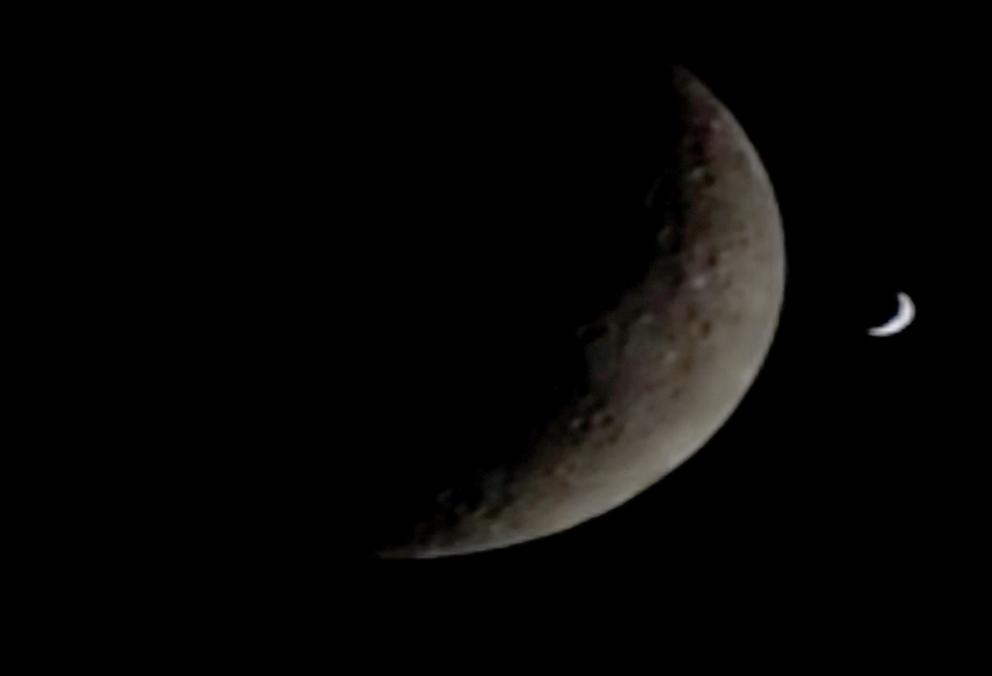
A crescent shaped Earth is seen behind the crescent Moon as seen just before the Orion spacecraft flew on the back side of the Moon, April 6, 2026.
NASA
Apr 06, 2026, 7:11 PM EDT
Orion makes its closest approach to the moon
Shortly after losing communication with NASA, the Artemis II crew is making its closest approach to the moon.
Orion will be about 4,070 miles above the surface of the moon, according to NASA.
The Artemis II astronauts will be the first humans to see most of the far side of the moon, or the side not visible from Earth, since the Apollo missions.
NASA astronaut Christina Koch lays on her back as she take photographs of the Moon out the window of the Orion spacecraft, April 6, 2026.
NASA
"It turns out there's about 60% of the far side, I think, that has never been seen by human eyes because of the lighting conditions," Reid Wiseman, mission commander, said during a news conference on March 29. "Apollo always wanted that light on the front side of the moon for their landing and launch capability. ... We've seen it in satellite photos, but humans have never, ever seen that before. That's cool."
Apr 06, 2026, 6:48 PM EDT
Artemis II crew passes behind the moon, enters communications blackout
The Artemis II crew has reached the far side of the moon and has entered a communications blackout, NASA said.
The federal space agency said the communications blackout is planned and should last for about 40 minutes as Orion passes behind the moon.
A crescent shaped Earth is seen behind the crescent Moon as seen just before the Orion spacecraft flew on the back side of the Moon, April 6, 2026.
NASA
The moon blocks the radio signals needed for Mission Control to maintain contact with Orion via the Deep Space Network, which is NASA's international array of giant radio antennas that supports interplanetary spacecraft missions.