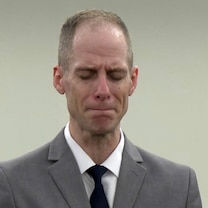
Deliberations resume as jury debates verdict on racketeering conspiracy charge
Deliberations have resumed this morning in the sex trafficking and racketeering conspiracy trial of Sean “Diddy” Combs.
Combs is seated alone at the defense counsel table this morning, flipping through a large book and appearing to take notes. The first three tables in the courtroom – normally filled by prosecutors and defense attorneys during the bulk of the trial – are empty except for Combs. His lawyers are huddled together on the side of the courtroom.

In a cliffhanger ending on Tuesday, the jury reported that they had reached a verdict on four of the criminal counts against Combs – two counts each of sex trafficking and transportation to engage in prostitution – but were unable to reach a verdict on the racketeering conspiracy charge. The outcome of the four verdicts reached on the sex trafficking and prostitution charges were not announced in court.
“We are unable to reach a verdict on Count One, as we have jurors with unpersuadable opinions on both sides,” the foreman wrote in a note sent to U.S. District Judge Arun Subramanian.
To convict on the racketeering conspiracy charge, the jurors were previously instructed that they need to believe beyond a reasonable doubt that Combs worked with at least one other person to commit two underlying crimes. Prosecutors allege those underlying crimes – known as “predicates” or “racketeering acts” – include kidnapping, arson, bribery, witness tampering, forced labor, sex trafficking, transportation for the purposes of prostitution, and drug distribution.
“What the government must prove is that there was a mutual understanding, either spoken or unspoken, between two or more people to cooperate with each other to accomplish the unlawful object,” Subramanian told the jury on Monday during his instructions on the law prior to the start of deliberations.
After the jury reported their impasse Tuesday, Subramanian urged them to continue deliberating on the racketeering conspiracy count.
“Again, your verdict must be unanimous, but you are not bound to surrender your honest convictions concerning the effect or weight of the evidence for the mere purpose of returning a verdict or solely because of the opinion of other jurors,” he told the jury. “Each of you must make your own decision about the proper outcome of this case based on your consideration of the evidence and your discussions with your fellow jurors. No juror should surrender his or her conscientious beliefs for the purpose of returning a unanimous verdict.”
Since the jury got the case on Monday they have deliberated for more than 13 hours.