A closer look at the candidates' ground game and why it matters
With close to tundra-like temperatures in Iowa in recent days, candidates are relying on their ground game to both convince voters to turn out and to convince them to back their chosen candidate once they get there.
Given the intricate rules of the Iowa caucuses, which aren't at all like traditional primaries, ground organizing could be an important factor in the results.
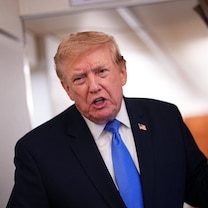
Trump has more than 2,000 "precinct captains" — which is at least one person for the 1,657 caucus precincts where votes will be cast. His campaign has hosted more than 400 caucus trainings across the state over the months of campaigning and has collected more than 50,000 caucus commitment cards. His team also plans on having at least one speaker represent it at each of the precincts, a testament to the more professional organization Trump has put together this cycle versus his first run in 2016.

DeSantis, meanwhile, has more than 1,700 precinct captains, and Never Back Down, the main super PAC supporting him, has held 85-plus precinct captain trainings. Never Back Down has also knocked on more than 935,000 doors and collected almost 40,000 caucus commitment cards. DeSantis and Never Back Down combined have made Iowa a top priority, investing heavily in an extensive campaign infrastructure — though one that hasn't been able to stop his slide to third in some polls.
Haley, meanwhile, has not disclosed how many precinct captains her campaign has. She has largely let groups linked to the Koch-backed Americans For Prosperity establish a supportive campaign infrastructure in Iowa.
Vivek Ramaswamy has nearly 1,000 precinct captains. He, too, has made Iowa a huge priority — visiting each of its 99 counties twice, though he still remains in a distant fourth in most surveys in the state.